|
|
|
Welcome To Sheikhupura - Today is
|

Pakistan(پاکِستان)- Khyber Pakhtunkhwa Urdu: خیبر پختونخوا; Pashto: خیبر پښتونخوا)


Khyber Pakhtunkhwa Urdu: خیبر پختونخوا; Pashto: خیبر پښتونخوا)
Khyber Pakhtunkhwa (abbreviated as KP or KPK; Urdu: خیبر پختونخوا; Pashto: خیبر پښتونخوا) is one of the four administrative provinces of Pakistan, located in the
northwestern region of the country along the international border with Afghanistan. It was previously known as the North-West Frontier Province (NWFP) until
2010 when the name was changed to Khyber Pakhtunkhwa by the 18th Amendment to Pakistan's Constitution, and is known colloquially by various other names.
Khyber Pakhtunkhwa is the third-largest province of Pakistan by the size of both population and economy, though it is geographically the smallest of five.
Within Pakistan, Khyber Pakhtunkhwa shares a border with Punjab, Balochistan, Azad Kashmir, Gilgit-Baltistan, and Islamabad. It comprises 10.5% of Pakistan's
economy, and is home to 11.9% of Pakistan's total population, with the majority of the province's inhabitants being Pashtuns. The province is the site of the
ancient kingdom Gandhara, including the ruins of its capital Pushkalavati near modern-day Charsadda. Originally a stronghold of Buddhism, the history of the
region was characterized by frequent invasions under various Empires due to its geographical proximity to the Khyber Pass.
Since the 9/11 attacks in the United States in 2001, the Khyber Pakhtunkhwa has been a major theatre of militancy and terrorism which intensified when the
Taliban began an unsuccessful attempt to seize the control of the province in 2004. With the launch of Operation Zarb-e-Azb against the Taliban insurgency,
the casualty and crime rates in the country as a whole dropped by 40.0% as compared to 2011–13, with even greater drops noted in Khyber Pakhtunkhwa and the
Federally Administered Tribal Areas. As of July 2014, about 929,859 people were reported to be internally displaced from North Waziristan to Khyber Pakhtunkhwa
as a result of Operation Zarb-e-Azb.
On March 2, 2017, the Government of Pakistan considered a proposal to merge the Federally Administered Tribal Areas with Khyber Pakhtunkhwa, and to repeal the
Frontier Crimes Regulations, which are currently applicable to the tribal areas. However, some political parties have opposed the merger, and called for the
tribal areas to instead become a separate province of Pakistan. On 24 May 2018, the National Assembly of Pakistan voted in favour of an amendment to the
Constitution of Pakistan to merge the Federally Administered Tribal Areas with Khyber Pakhtunkhwa province. The Khyber Pakhtunkhwa Assembly then approved the
historic FATA-KP merger bill on 28 May 2018 making FATA officially part of Khyber Pakhtunkhwa, which was then signed by President Mamnoon Hussain, completing
the process of this historic merger.
Khyber Pakhtunkhwa means the "Khyber part of the land of the Pashtuns (or Pakhtuns)", while only the word Pakhtunkhwa means "Land of Pashtuns", and according
to some scholars, it means "Pashtun culture and society".
When the British established it as a province, they called it "North West Frontier Province" (abbreviated as NWFP) due to its relative location being in north
west of their Indian Empire. After the creation of Pakistan, Pakistan continued with this name but a Pashtun nationalist party, Awami National Party demanded
that the province name be changed to "Pakhtunkhwa". Their logic behind that demand was that Punjabi people, Sindhi people and Balochi people have their
provinces named after their ethnicities but that is not the case for Pashtun people.
Major political parties especially Pakistan Muslim League were against that name since it was too similar to Bacha Khan's demand of separate nation of Pashtunistan.
They wanted to name the province something other than which does not carry Pashtun identity in it as there were other minor ethnicities living in the province
especially Hindkowans who spoke Hindko dialect of Punjabi language thus the word Khyber was introduced with the name because it is the name of a major pass which
connects Pakistan to Afghanistan.
History :
During the times of Indus Valley Civilization (3300 BCE – 1300 BCE) the modern Khyber Pakhtunkhwa's Khyber Pass, through Hindu Kush provided a route to other
neighbouring regions and was used by merchants on trade excursions. From 1500 BCE, Indo-Aryan peoples started to enter in the region(of modern-day Iran,
Pakistan, Afghanistan, North India) after having passed Khyber Pass.
Gold coin of Kushan king Kanishka II with Shiva (200–220 AD)
Approximate boundaries of the Gandharan Empire; Alexander Army also passed through this area centered on the modern day Khyber Pakhtunkhwa province of Pakistan
The Gandharan civilization, which reached its zenith between the sixth and first centuries BCE, and which features prominently in the Hindu epic poem, the
Mahabharatha,[24] had one of its cores over the modern Khyber Pakhtunkhwa province. The modern day capital city of Peshawar was originally known in ancient times
as Purushapura when the region was Hindu. Vedic texts refer to the area as the Janapada of Pushkalavati. The area was once known to be a great center of learning.
Greek and Persian Invasions :
At around 516 BCE., Darius Hystaspes sent Scylax, a Greek seaman from Karyanda, to explore the course of the Indus river. Darius Hystaspes subsequently subdued the
races dwelling west of the Indus and north of Kabul. Gandhara was incorporated into the Persian Empire as one of its far easternmost satrapy system of government.
The satrapy of Gandhara is recorded to have sent troops for Xerxes' invasion of Greece in 480 BCE.
In the spring of 327 BCE Alexander the Great crossed the Indian Caucasus (Hindu Kush) and advanced to Nicaea, where Omphis, king of Taxila and other chiefs joined him.
Alexander then dispatched part of his force through the valley of the Kabul River, while he himself advanced into modern Khyber Pakhtunkhwa's Bajaur and Swat regions
with his troops. Having defeated the Aspasians, from whom he took 40,000 prisoners and 230,000 oxen, Alexander crossed the Gouraios (Panjkora River) and entered
into the territory of the Assakenoi – also in modern-day Khyber Pakhtunkhwa. Alexander then made Embolima (thought to be the region of Amb in Khyber Pakhtunkhwa)
his base. The ancient region of Peukelaotis (modern Hashtnagar, 17 miles (27 km) north-west of Peshawar) submitted to the Greek invasion, leading to Nicanor, a
Macedonian, being appointed satrap of the country west of the Indus, which includes the modern Khyber Pakhtunkhwa province.
Hindu and Buddhist Rule :
After Alexander's death in 323 BCE Porus obtained possession of the region, but was murdered by Eudemus in 317 BCE. Eudemus then left the
region, and with his departure Macedonian power collapsed. Sandrocottus (Chandragupta), the founder of the Mauryan dynasty, then declared himself master of the
province. His grandson, Ashoka, made Buddhism the dominant religion in ancient Gandhara.
Relics of the Buddha from the ruins of the Kanishka stupa at Peshawar – now in Mandalay, Myanmar
After Ashoka's death the Mauryan empire collapse, just as in the west the Seleucid power was rising. The Greek princes of neighboring Bactria (in modern Afghanistan)
took advantage of the power vacuum to declare their independence. The Bactrian kingdoms were then attacked from the west by the Parthians and from the north (about
139 BCE) by the Sakas, a Central Asian tribe. Local Greek rulers still exercised a feeble and precarious power along the borderland, but the last vestige of Greek
dominion was extinguished by the arrival of the Yueh-chi.
Early Islamic Invasions :After the Saffarids had left in Kabul, the Hindu Shahis had once again been placed into power. The restored Hindu Shahi kingdom was founded
by the Brahmin minister Kallar in 843 CE. Kallar had moved the capital into Udabandhapura in modern-day Khyber Pakhtunkhwa from Kabul. Trade had flourished and many
gems, textiles, perfumes, and other goods had been exported West. Coins minted by the Shahis have been found all over the Indian subcontinent. The Shahis had built
Hindu temples with many idols, all of which were later looted by invaders. The ruins of these temples can be found at Nandana, Malot, Siv Ganga, and Ketas, as well
as across the west bank of the Indus river.
Mughal :
Mughal suzerainty over the Khyber Pakhtunkhwa region was partially established after Babar, the founder of the Mughal Empire, invaded the region in 1505
CE via the Khyber Pass. The Mughal Empire noted the importance of the region as a weak point in their empire's defenses, and determined to hold Peshawar and Kabul
at all cost against any threats from the Uzbek Shaybanids.
He was forced to retreat westwards to Kabul, but returned to defeat the Lodis in July 1526, when he captured Peshawar from Daulat Khan Lodi, though the region
was never considered to be fully subjugated to the Mughals.
Under the reign of Babar's son, Humayun, direct Mughal rule was briefly challenged with the rise of the Pashtun Emperor, Sher Shah Suri, who began construction of
the famous Grand Trunk Road – which links Kabul, Afghanistan with Chittagong, Bangladesh over 2000 miles to the east. Later, local rulers once again pledged loyalty
to the Mughal emperor.
Yusufzai tribes rose against Mughals during the Yusufzai Revolt of 1667, and engaged in pitched-battles with Mughal battalions in Peshawar and Attock.
Afridi tribes resisted Aurangzeb rule during the Afridi Revolt of the 1670s. The Afridis massacred a Mughal battalion in the Khyber Pass in 1672 and shut the
pass to lucrative trade routes. Following another massacre in the winter of 1673, Mughal armies led by Emperor Aurangzeb himself regained control of the entire
area in 1674, and enticed tribal leaders with various awards in order to end the rebellion.
Referred to as the "Father of Pashto Literature" and hailing from the city of Akora Khattak, the warrior-poet Khushal Khan Khattak actively participated in revolt
against the Mughals and became renowned for his poems that celebrated the rebellious Pashtun warriors.
Durrani Afghans :
The area fell subsequently under the rule of Ahmed Shah Durrani, founder of the Afghan Durrani Empire, following a grand nine-day long assembly of leaders,
known as the loya jirga. Their rule was interrupted by a brief invasion of the Hindu Marathas, ruled over the region following the 1758 Battle of Peshawar
for eleven months till early 1759 when the Durrani rule was re-established.
Under the reign of Timur Shah, the Mughal practice of using Kabul as a summer capital and Peshawar as a winter capital was reintroduced, Peshawar's Bala
Hissar Fort served as the residence of Durrani kings during their winter stay in Peshawar.
Mahmud Shah Durrani, became king, and quickly sought to seize Peshawar from his half-brother, Shah Shujah Durrani. Shah Shujah was then himself proclaimed
king in 1803, and recaptured Peshawar while Mahmud Shah was imprisoned at Bala Hissar fort until his eventual escape. In 1809, the British sent an emissary
to the court of Shah Shujah in Peshawar, marking the first diplomatic meeting between the British and Afghans. Mahmud Shah allied himself with the Barakzai
Pashtuns, and amassed an army in 1809, and captured Peshawar from his half-brother, Shah Shujah, establishing Mahmud Shah's second reign, which lasted under
1818.
Sikh :
Ranjit Singh invaded Peshawar in 1818 and captured it from the Afghan Empire. The Sikh Empire based in Lahore did not immediately secure direct control
of the Peshawar region, but rather paid nominal tribute to Jehandad Khan of Khattak, who was nominated by Ranjit Singh to be ruler of the region.
After Ranjit Singh's departure from the region, Khattak's rule was undermined and power seized by Yar Muhammad Khan. In 1823, Ranjit Singh returned to capture
Peshawar, and was met by the armies of Azim Khan at Nowshera. Following the Sikh victory at the Battle of Nowshera, Ranjit Singh re-captured Peshawar.
Rather than re-appointing Jehandad Khan of Khattak, Ranjit Singh selected Yar Muhammad Khan to once again rule the region.
The Sikh Empire annexed the Khyber Pakhtunkhwa region following advances from the armies of Hari Singh Nalwa. An 1835 attempt by Dost Muhammad Khan to re-occupy
Peshawar failed when his army declined to engage in combat with the Dal Khalsa. Dost Muhammad Khan's son, Mohammad Akbar Khan engaged with Sikh forces the
Battle of Jamrud of 1837, resulting in the death of Hari Singh Nalwa.
During Sikh rule, an Italian name Paolo Avitabile was appointed administrator of Peshawar, and is remembered for having unleashed a reign of fear there. The city's
famous Mahabat Khan, built in 1630 in the Jeweler's Bazaar, was badly damaged and desecrated by the Sikh conquerors.
Sikh settlers from Punjab were settled in the Khyber Pakhtunkhwa region. Amb (Tanawal) was only princely state that is free from the influence of Sikhs.And ruled by
Tanolis. Peshawar's only remaining Gurdwaras were built by Hari Singh Nalwa to accommodate the newly-settle Sikhs. The Sikhs also rebuilt the Bala Hissar fort
during their occupation of the Peshawar.
British Raj :
British East India Company defeated the Sikhs during the Second Anglo-Sikh War in 1849, and incorporated small parts of the region into the Province
of Punjab. While Peshawar was the site of a small mutiny against British during the Indian Rebellion of 1857, local Pashtun tribes throughout the region generally
remained neutral and supportive of the British as they detested the Sikhs, in contrast to other parts of British India which rose up in revolt against the British.
However, British control of parts of the region was routinely challenged by Wazir tribesmen in Waziristan and other Pashtun tribes, who resisted any foreign
occupation until Pakistan was created. By the late 19th century, the official boundaries of Khyber Pakhtunkhwa region still had not been defined as the region was
still claimed by the Kingdom of Afghanistan. It was only in 1893 The British demarcated the boundary with Afghanistan under a treaty agreed to by the Afghan king,
Abdur Rahman Khan, following the Second Anglo-Afghan War. Several princely states within the boundaries of the region were allowed to maintain their autonomy
under the terms of maintaining friendly ties with the British. As the British war effort during World War One demanded the reallocation of resources from British
India to the European war fronts, some tribesmen from Afghanistan crossed the Durand Line in 1917 to attack British posts in an attempt to gain territory and weaken
the legitimacy of the border. The validity of
the Durand Line, however, was re-affirmed in 1919 by the Afghan government with the signing of the Treaty of Rawalpindi, which ended the Third Anglo-Afghan War
– a war in which Waziri tribesmen allied themselves with the forces of Afghanistan's King Amanullah in their resistance to British rule. The Wazirs and other tribes,
taking advantage of instability on the frontier, continued to resist British occupation until 1920 – even after Afghanistan had signed a peace treaty with the British.
British campaigns to subdue tribesmen along the Durand Line, as well as three Anglo-Afghan wars, made travel between Afghanistan and the densely populated heartlands
of Khyber Pakhtunkwa increasingly difficult. The two regions were largely isolated from one another from the start of the Second Anglo-Afghan War in 1878 until the
start of World War Two in 1939 when conflict along the Afghan frontier largely dissipated. Concurrently, the British continued their large public works projects in
the region, and extended the Great Indian Peninsula Railway into the region, which connected the modern Khyber Pakhtunkhwa region to the plains of India to the east.
Other projects, such as the Attock Bridge, Islamia College University, Khyber Railway, and establishment of cantonments in Peshawar, Kohat, Mardan, and Nowshera
further cemented British rule in the region. In 1901, the British carved out the northwest portions of Punjab Province to create the Northwest Frontier Province
(NWFP), which was renamed "Khyber Pakhtunkhwa" in 2010.
Bacha Khan with Mahatma Gandhi
During the independence period there was a Congress-led ministry in the province, which was led by secular Pashtun leaders, including Bacha Khan, who preferred
joining India instead of Pakistan. The secular Pashtun leadership was also of the view that if joining India was not an option then they should espouse the cause
of an independent ethnic Pashtun state rather than Pakistan. The secular stance of Bacha Khan had driven a wedge between the ulama of the otherwise pro-Congress
(and pro-Indian unity) Jamiat Ulema Hind (JUH) and Bacha Khan's Khudai Khidmatgars. The directives of the ulama in the province began to take on communal tones.
The ulama saw the Hindus in the province as a 'threat' to Muslims. Accusations of molesting Muslim women were levelled at Hindu shopkeepers in Nowshera, a town where
anti-Hindu sermons were delivered by maulvis.
Tensions also rose in 1936 over the abduction of a Hindu girl in Bannu. British Indian court ruled against the marriage of a Hindu-converted Muslim girl at Bannu,
after the girl's family filed case of abduction and forced conversion. The ruling was based on the fact that the girl was a minor and was asked to make her decision
of conversion and marriage after she reaches the age of majority, till then she was asked to live with a third party. The verdict 'enraged' the Muslims -
especially the Pashtun tribesmen. The Dawar Maliks and mullahs left the Tochi far the Khaisora Valley to the south to rouse the Torikhel Wazir. The enraged
tribesmen mustered two large lashkars 10,000 strong and battled the Bannu Brigade, with heavy casualties on both sides. Widespread lawlessness erupted as tribesmen
blocked roads, overran outposts and ambushed convoys. The British retaliated by sending two columns converging in the Khaisora river valley. They suppressed the
agitation by imposing fines and by destroying the houses of the ringleaders, including that of Haji Mirzali Khan (Faqir of Ipi). However, the pyrrhic nature of
the victory and the subsequent withdrawal of the troops was credited by the Wazirs to be a manifestation of the power of Mirzali Khan. He succeeded in inducing
a semblance of tribal unity, as the British noticed with dismay, among various sections of Tori Khel Wazirs, the Mahsud and the Bettani. He cemented his position
as religious leader by declaring a Jihad against the British. This move also helped rally support from Pashtun tribesman across the border.
Such controversies stirred up anti-Hindu sentiments amongst the province's Muslim population. By 1947 the majority of the ulama in the province began supporting the
Muslim League's idea of Pakistan.
Bannu Resolution :
In June 1947, Mirzali Khan (Faqir of Ipi), Bacha Khan, and other Khudai Khidmatgars declared the Bannu Resolution, demanding that the Pashtuns be
given a choice to have an independent state of Pashtunistan composing all Pashtun majority territories of British India, instead of being made to join the new state
of Pakistan. However, the British Raj refused to comply with the demand of this resolution.
Immediately prior to the creation of Pakistan in 1947, the British held a referendum in the NWFP to allow voters to choose between joining Pakistan or India.
The referendum was held on 2 July 1947 while polling began on 6 July 1947 and the referendum results were made public on 20 July 1947. According to the official
results, there were 572,798 registered voters, out of which 289,244 (99.02%) votes were cast in favor of Pakistan, while only 2874 (0.98%) were cast in favor of
India. According to an estimate, the total turnout for the referendum was only 15% less than the total turnout in the 1946 elections. At the same time, a
large number of Khudai Khidmatgar supporters boycotted the referendum, and intimidation against Hindu and Sikh voters by supporters of the Pakistan Movement was
also reported. Bacha Khan pledged allegiance to the new state of Pakistan in 1947, and thereafter abandoned his goals of an independent Pashtunistan and a
United India, in favor of supporting increased autonomy for the NWFP under Pakistani rule. He was subsequently arrested by Pakistan several times for his
opposition to strong centralized rule.
On the other hand, Mirzali Khan and his followers refused to recognise Pakistan, and launched a campaign against Pakistan. They continued their guerilla warfare
against the new nation's government. In 1950, they announced the creation of Pashtunistan as an independent nation. A Pashtun tribal jirga, held in Razmak,
Waziristan, appointed Mirzali Khan as the President of the National Assembly for Pashtunistan. He didn't surrender to the government of Pakistan throughout his life.
However, his popularity among the people of Waziristan declined over the years. He died a natural death in 1960 in Gurwek, Waziristan.
As the region came under British control, as had been agreed to by the Afghan government following the British victory over Afghanistan in the Second Anglo-Afghan
War and after the treaty ending Third Anglo-Afghan War, no option was available to cede the territory to the rule of the Afghan king even though Afghanistan
continued to claim the entire region as it was part of the Durrani Empire prior the conquest of the region by the Sikhs in 1818. By 1947 Pashtun nationalists
were advocating for a united India, and no prominent voices advocated for a union with Afghanistan. All the princely states within the boundaries of the
NWFP were allowed to maintain certain autonomy, but in 1970s most of the princely states were merged completely into Pakistan.
After the creation of Pakistan :
After the creation of Pakistan in 1947, Afghanistan was the sole member of the United Nations to vote against Pakistan's accession
to the UN because of Kabul's claim to the Pashtun territories on the Pakistani side of the Durand Line. Afghanistan's Loya Jirga of 1949 declared the Durand
Line invalid, which led to border tensions with Pakistan, and decades of mistrust between the two states. Afghan governments have also periodically refused to
recognize Pakistan's inheritance of British treaties regarding the region. During the 1950s, Afghanistan supported the secessionist Pushtunistan Movement.
As a result of the Soviet invasion of Afghanistan in 1979, over five million Afghan refugees poured into Pakistan, mostly choosing to reside in the NWFP (as of 2007,
nearly 3 million remained). The North-West Frontier Province became a base for the Afghan resistance fighters and the Deobandi ulama of the province played a
significant role in the Afghan 'jihad', with Madrasa Haqqaniyya becoming a prominent organisational and networking base for the anti-Soviet Afghan fighters.
The province remained heavily influenced by events in Afghanistan thereafter. The 1989–1992 Civil war in Afghanistan following the withdrawal of Soviet forces
led to the rise of the Afghan Taliban, which had emerged in the border region between Afghanistan, Balochistan, and FATA as a formidable political force.
In 2010 the province was renamed "Khyber Pakhtunkhwa." Protests arose among the local Hindkowan, Chitrali, Kohistani and Kalash populations over the name change,
as they began to demand their own provinces. The hindkowans, kohistanis and chitralis are last remains of ancient Gandhari people and they jointly protested for
preservation of their culture.Seven people were killed and 100 injured in protests on 11 April 2011. The Awami National Party sought[when?] to rename the province
"Pakhtunkhwa", which translates to "Land of Pashtuns" in the Pashto language. The name change was largely opposed by non-Pashtuns, and by political parties such as
the Pakistan Muslim League-N, who draw much of their support from non-Pashtun regions of the province, and by the Islamist Muttahida Majlis-e-Amal coalition.
Khyber Pakhtunkhwa has been a site of militancy and terrorism that started after the attacks of September 11, 2001, and intensified when the Pakistani Taliban began
an attempt to seize power in Pakistan starting in 2004. Armed conflict began in 2004, when tensions, rooted in the Pakistan Army's search for al-Qaeda fighters in
Pakistan's mountainous Waziristan area (in the Federally Administered Tribal Areas), escalated into armed resistance.
Fighting is ongoing between the Pakistani Army and armed militant groups such as the Tehrik-i-Taliban Pakistan (TTP), Jundallah, Lashkar-e-Islam (LeI),
Tehreek-e-Nafaz-e-Shariat-e-Mohammadi (TNSM), al-Qaeda, and elements of organized crime have led to the deaths of over 50,000 Pakistanis since the
country joined the U.S-led War on Terror, with Khyber Pakhtunkhwa being the site of most of the conflict.
Khyber Pakhtunkhwa is also the main theater for Pakistan's Zarb-e-Azb operation – a broad military campaign against militants located in the province, and
neighboring FATA. By 2014, casualty rates in the country as a whole dropped by 40% as compared to 2011–2013, with even greater drops noted in Khyber Pakhtunkhwa,
despite the province being the site of a large massacre of schoolchildren by terrorists in December 2014.
Climate :
The climate of Khyber Pakhtunkhwa varies immensely for a region of its size, encompassing most of the many climate types found in Pakistan. The province
stretching southwards from the Baroghil Pass in the Hindu Kush covers almost six degrees of latitude; it is mainly a mountainous region. Dera Ismail Khan is one of
the hottest places in South Asia while in the mountains to the north the weather is mild in the summer and intensely cold in the winter. The air is generally very
dry; consequently, the daily and annual range of temperature is quite large.
Population :
The province has an estimated population of about 27.5 million, according to 2011 estimates, that is an increase of 51.6% over 1998 figures, ranking
Khyber Pakhtunkhwa over Islamabad, Punjab and Azad Kashmir in population gains during that period.[83] The largest ethnic group is the Pashtun, who historically
have been living in the areas for centuries. Around 1.5 million Afghan refugees also remain in the province, the majority of whom are Pashtuns followed by
Tajiks, Hazaras, and other smaller groups. Despite having lived in the province for over two decades, they are registered as citizens of Afghanistan.
The Pashtuns of Khyber Pakhtunkhwa observe tribal code of conduct called Pakhtunwali which has four high value components called nang (honor), badal (revenge),
melmastiya (hospitality) and nanawata (rights to refuge).
According to the 1998 census, the population of the province was approximately 17¾ million, of whom 52% are males and 48% are females
Government and politics :
Political leanings and the Legislative branch
Main article: Provincial Assembly of Khyber Pakhtunkhwa
The Provincial Assembly is an unicameral legislature, which consists of 124 members elected to serve for a constitutionally bounded term of five years. Historically,
the province perceived to be a stronghold of the ANP– a pro-Russian, a procommunist, left-wing and nationalist party. Since 1970s, the Pakistan Peoples Party
(PPP) also enjoyed considerable support in the province due to its socialist agenda. Khyber Pakhtunkhwa was thought to be another leftist region of the country
after Sindh.
After the nationwide general elections held in 2002, a plurality voting swing in the province elected one of Pakistan's only religiously-based provincial governments
led by ultraconservative MMA during the administration of President Pervez Musharraf. The American involvement in neighboring Afghanistan contributed towards the
electoral victory of the Islamic coalition led by JeI whose social policies made the province a ground-swell of anti-Americanism. The electoral victory of MMA
was also in context of guided democracy in Musharraff administration that barred the mainstream political parties, the leftist Pakistan Peoples Party and the centre-
right PML(N), whose chairmen and presidents having been barred from participation in the elections.
Policy enforcement of a range of social restrictions, though the implementation of strict Shariah was introduced by the MMA government but the law was never fully
enacted due to objections of Governor backed by the Musharraff administration. Restrictions on public musical performances were introduced, as well as a ban
prohibiting music to be played in public places as part of the "Prohibition of Dancing and Music Bill, 2005" – which led to the creation of a thriving underground
music scene in Peshawar. The Islamist government also attempted to enforce compulsory hijab on women, and wished to enforce gender segregation in the
province's educational institutions. The coalition further tried to prohibit male doctors from performing ultrasounds on women, and tried to close the
province's cinemas. In 2005, the coalition successfully passed the "Prohibition of Use of Women in Photograph Bill, 2005," leading to the removal of all public
advertisements that featured women.
In the height of far-right insurgency in the country, the religious coalition lost its grip in the general elections held in 2008, and the religious coalition was
swept out of power by the leftist Awami National Party which also witnessed the resignation of President Musharraf in 2008. The ANP government eventually led
the initiatives to repeal the major Islamist's social programs, with the backing of the federal government led by PPP in Islamabad. Public disapproval of ANP's
leftist program integrated in civil administration with the sounded allegations of corruption as well as popular opposition against religious program promoted by
the MMA swiftly shifted the province's leniency towards the right-wing spectrum led by the PTI in 2012. In 2013, the provincial politics shifted towards the
right wingnational conservatism when the PTI led by Imran Khan was able to form the minority government in coalition with the JeI; the province now serves as the
stronghold of the rightist PTI and is perceived as right-wing spectrum of the country.
In non-Pashtun areas, such as Attock, Abbottabad, and Hazara District, the PML(N), the centre-right party, enjoys considerable public support over economical and
public policy issues and has a substantial vote bank.


Khyber Pakhtunkhwa in Pictures(KPK Gallery)
|
|
|
|
|
|
History Of Sheikhupura
|
|
|
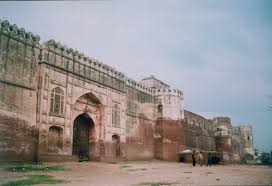
The history of Sheikhupura goes back to 100 B.C. . .

|
|
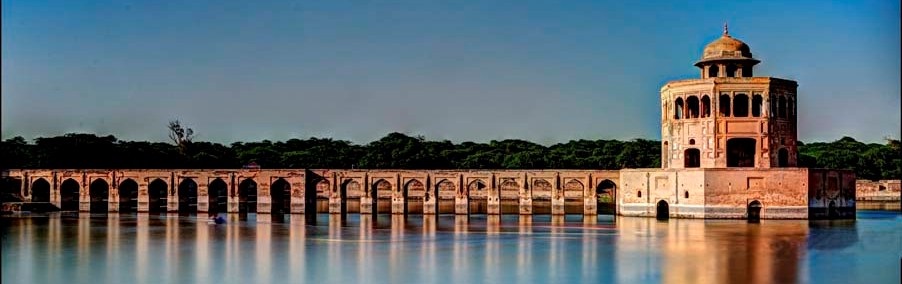
Hiran Minar
|
|
|
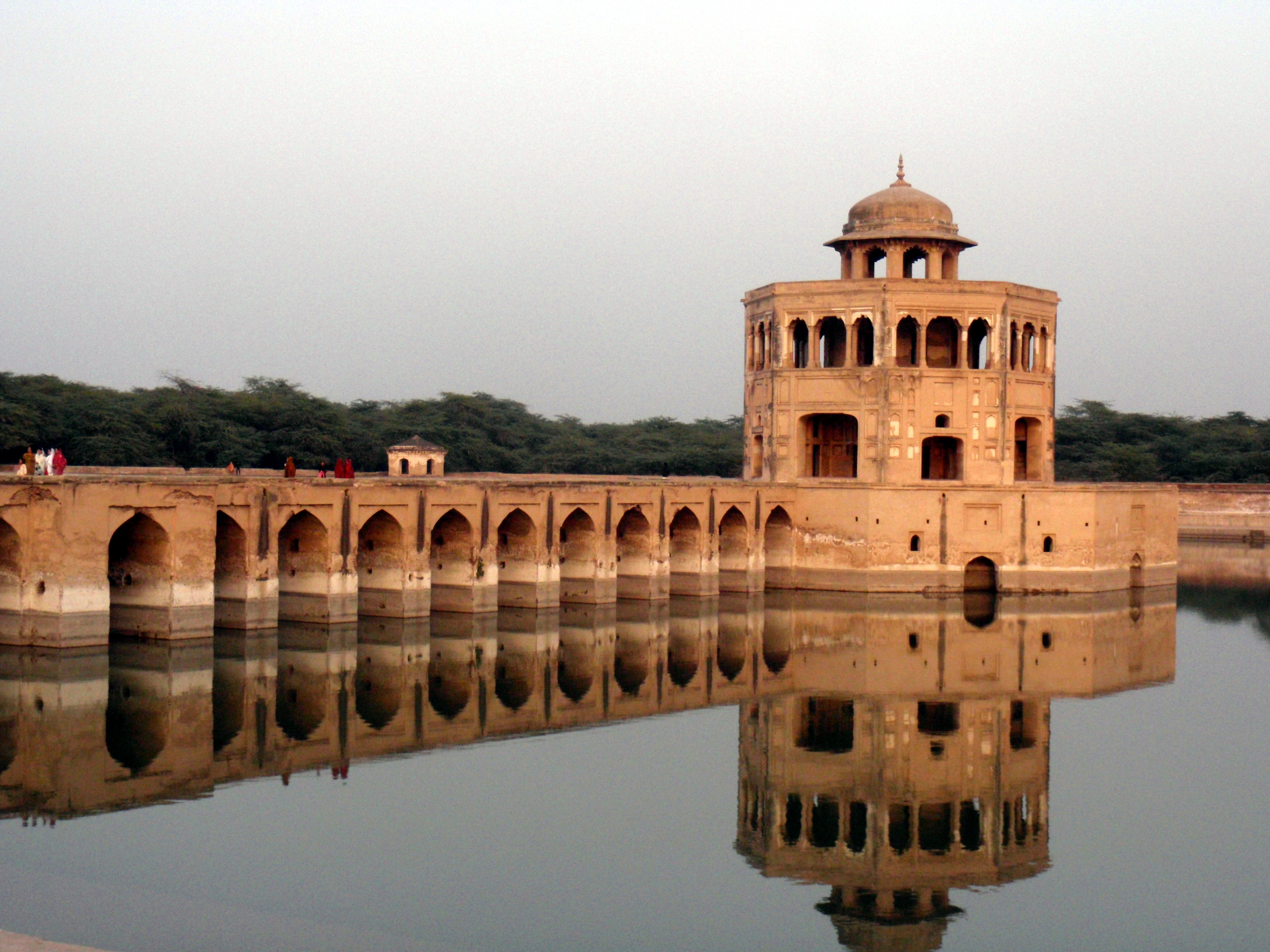
Hiran Minar (Minaret of Antelope) is peaceful environs near Lahore in Sheikhupura....
|
|
|
|
Qila Sheikhupura
|
|

|
Sheikhupura Fort/Qilla Sheikhupira is a fort near the city of Sheikhupura...
|
|
Waris Shah
|
|
|
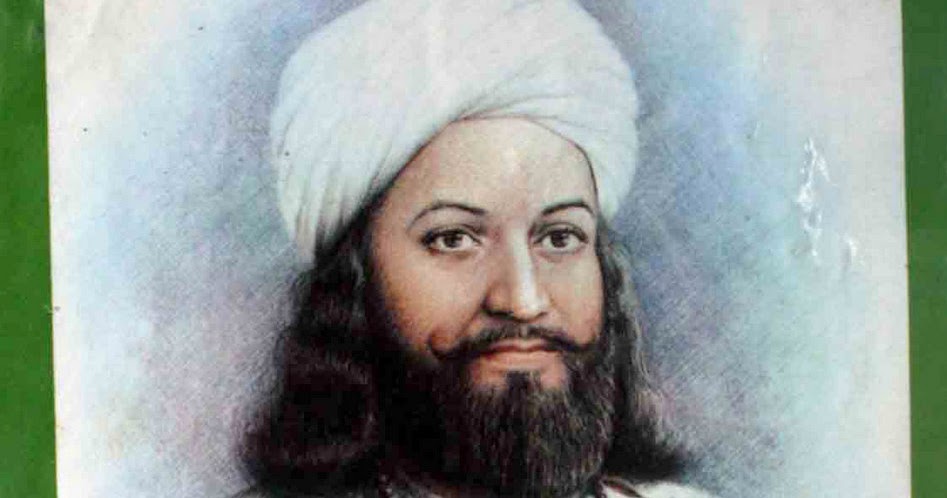
Waris Shah was born in Jandiala Sher Khan, Punjab...
|
|
|
|
Famous Sheikhupurians
|
|

|
Famous Personalities born in Sheikhupura will be added here...
|
|
|
|

|
|
|
Home
| Sheikhupura
| Ferozewala
| Muridke
| Sharaqpur
| Safdarabad
| Forum
| Pakistan
| Contact Us
Sheikhupura.pk © 2006 All rights reserved.
|