|
|
|
Welcome To Sheikhupura - Today is
|

Pakistan(پاکِستان)- Punjab (Urdu, Punjabi: پنجاب, panj-āb, "five waters"


Punjab (Urdu, Punjabi: پنجاب, panj-āb, "five waters"
Punjab (Urdu, Punjabi: پنجاب, panj-āb, "five waters") is Pakistan's second largest province by area, after Balochistan, and
its most populous province, with an estimated population of 110,012,442 as of 2017. Forming the bulk of the transnational Punjab region, it is bordered by
the Pakistan provinces of Sindh, Balochistan, and Khyber Pakhtunkhwa, the enclave of Islamabad, and Azad Kashmir. It also shares borders with the Indian states
of Punjab, Rajasthan and Jammu and Kashmir. The provincial capital of Punjab is the city Lahore, a cultural, historical, economic and cosmopolitan centre of
Pakistan where the country's cinema industry, and much of its fashion industry, are based.
Punjab has been inhabited since ancient times. The Indus Valley Civilization, dating to 2600 BCE, was first discovered at Harappa. Punjab features heavily
in the Hindu epic poem, the Mahabharata, and is home to Taxila, site of what is considered by many to be the oldest university in the world.
In 326 BCE, Alexander the Great defeated King Porus at the Battle of the Hydaspes near Mong, Punjab. The Umayyad empire conquered Punjab in the 8th century CE.
Punjab was later invaded by Tamerlane, Babur, and Nader Shah. Punjab reached the height of its splendour during the reign of the Mughal Empire, which for a time
ruled from Lahore. Following a successful rebellion, Sikh-led armies claimed Lahore in 1759. The administration of the Sikh Empire was based out of Lahore, until
its defeat by the British. Punjab was central to the independence movements of both India and Pakistan, with Lahore being site of both the Declaration of Indian
Independence, and the resolution calling for the establishment of Pakistan. The province was formed when the Punjab province of British India was divided along
religious boundaries in 1947 by the Radcliffe Line after Partition.
Punjab is Pakistan's most industrialised province with the industrial sector making up 24% of the province's gross domestic product. Punjab is known in
Pakistan for its relative prosperity, and has the lowest rate of poverty amongst all Pakistani provinces. A clear divide is present between the
northern and southern portions of the province; with poverty rates in prosperous northern Punjab amongst the lowest in Pakistan, while some in south
Punjab are amongst the most impoverished.[18] Punjab is also one of South Asia's most urbanized regions with approximately 40% of people living in urban areas.
Its human development index rankings are high relative to the rest of Pakistan.
Punjab is known in Pakistan for its relatively liberal social attitudes. The province has been strongly influenced by Sufism, with numerous Sufi shrines
spread across Punjab which attract millions of devotees annually. The founder of the Sikh faith, Guru Nanak, was born in the Punjab town of Nankana Sahib
near Lahore. Punjab is also the site of the Katasraj Temple, which features prominently in Hindu mythology. Several UNESCO World Heritage Sites
are located in Punjab, including the Shalimar Gardens, the Lahore Fort, the archeological excavations at Taxila, and the Rohtas Fort.
History :
Due to its location, the Punjab region came under constant attack and witnessed centuries of foreign invasions by the Persians, Greeks, Kushans, Scythians, Turks
and Afghans. The northwestern part of South Asia, including Punjab, was repeatedly invaded or conquered by various foreign empires, including those of Tamerlane,
Alexander the Great, and Genghis Khan.
The oldest evidence of life in Pakistan has been found in Soan River valley. It was here that some of the earliest signs of humans have been discovered during the
excavations of prehistoric mounds. Tools up to two million years old have been recovered in potohar plateau. In the Soan River, many fossil bearing rocks are
exposed on the surface. 14 million year old fossils of gazelle, rhinoceros, crocodile, giraffe and rodents have been found there.
Punjab during Mahabharata times was known as Panchanada. Punjab was part of the Indus Valley Civilization, more than 4000 years ago. The main site in
Punjab was the city of Harrapa. The Indus Valley Civilization spanned much of what is today Pakistan and eventually evolved into the Indo-Aryan civilization. The
Vedic civilisation flourished along the length of the Indus River.
Gandhāra was an ancient kingdom situated in the northwestern region of Pakistan, in the Peshawar valley and Potohar plateau with its capital at Taxila.Gandhara
existed since the time of the Rigveda (c. 1500–1200 BC), as well as the Zoroastrian Avesta, which mentions it as Vaēkərəta, the sixth most beautiful place
on earth, created by Ahura Mazda. Gandhara was conquered by the Achaemenid Empire in the 6th century BC. Conquered by Alexander the Great in 327 BC,
Mughal Empire :
The Punjab region rose to significance in the Hindustani empire when Lahore became a seat for royal family in 1584, the legacy of which is seen today in its rich
display of Mughal architecture.
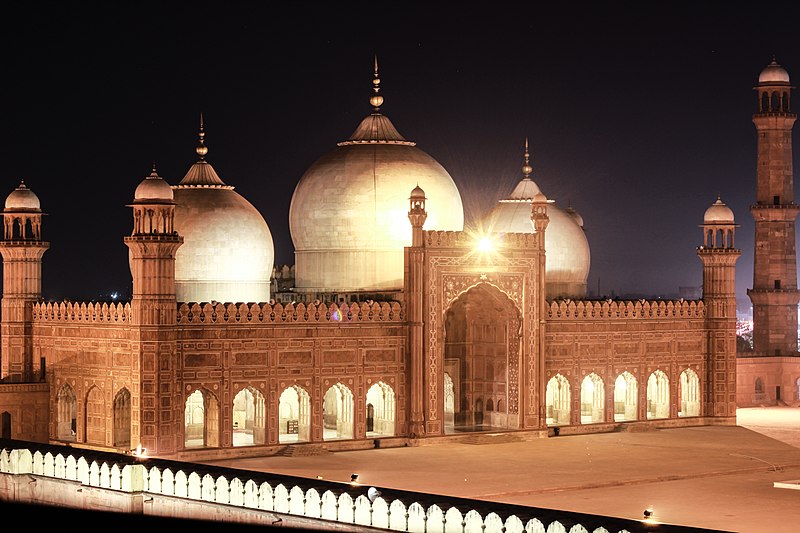
The Mughals controlled the region from 1524 until around 1739 and implemented building projects such as the Shalimar Gardens and the Badshahi Mosque, both
situated in Lahore. Padshah (emperor) Akbar established two of his original twelve subahs (imperial top-level provinces) in Punjab :
(northern) Lahore Subah, bordering Kabul (Afghanistan), (later) split-off Kashmir, (Old) Delhi and Multan subahs
(southern) Multan Subah, bordering Kabul, Lahore, (Old) Delhi, Ajmer, Thatta (Sindh) subahs, the Persian Safavid empire[citation needed] and shortly Qandahar
subah.
Muslim soldiers, traders, architects, theologians and Sufis (Muslim mystics) came from the rest of the Muslim world to the Islamic Sultanate in South Asia.
Maratha Empire :
In 1758 Raghunath Rao, the general of the Hindu Maratha Empire, conquered Lahore and Attock. Timur Shah Durrani, the son and viceroy of Duranni
Monarch Ahmad Shah Abdali, was driven out of Punjab. Lahore, Multan, Dera Ghazi Khan, Kashmir and other subahs (ex-Mughal provinces) on the south and eastern side
of Peshawar were under the Maratha rule for the most part. In Punjab and Kashmir, the Marathas were now major players. The Third Battle of Panipat took
place on 1761, Ahmad Shah Abdali invaded the Maratha territory of Punjab and captured remnants of the Maratha Empire in Punjab and Kashmir regions and re-consolidated
control over them.
Sikh Empire :
Badshahi Mosque with damaged minarets during Sikh rule
Ranjit Singh's Empire
In the mid-fifteenth century, the religion of Sikhism was born. During the Mughal empire, many Hindus increasingly adopted Sikhism. These became a formidable military
force against the Mughals and later against the Afghan Empire. After fighting Ahmad Shah Durrani in the later eighteenth century, the Sikhs took control of Punjab
and managed to establish the Sikh Empire under the Jat ruler Maharaja Ranjit Singh, which lasted from 1799 to 1849. The capital of Ranjit Singh's empire was Lahore,
and the empire also extended into Afghanistan and Kashmir. Bhangi Misl was the first Sikh band to conquer Lahore and other towns of Punjab. Syed Ahmad Barelvi a
Muslim, waged jihad and attempted to create an Islamic state with strict enforcement of Islamic law. Syed Ahmad Barelvi in 1821 with many supporters and spent
two years organising popular and material support for his Punjab campaign. He carefully developed a network of people through the length and breadth of India to
collect funds and encourage volunteers, travelling widely throughout India attracting a following among pious Muslims. In December 1826 Sayyid Ahmad and his
followers clashed with Sikh troops at Akora Khattak, but with no decisive result. In a major battle near the town of Balakot in 1831, Sayyid Ahmad and Shah Ismail
Shaheed with volunteer Muslims were defeated by the professional Sikh Army.
British Empire :
Maharaja Ranjit Singh's death in the summer of 1839 brought political chaos and the subsequent battles of succession and the bloody infighting
between the factions at court weakened the state. Relationships with neighbouring British territories then broke down, starting the First Anglo-Sikh War; this
led to a British official being resident in Lahore and the annexation in 1849 of territory south of the Satluj to British India. After the Second Anglo-Sikh War
in 1849, the Sikh Empire became the last territory to be merged into British India. In Jhelum 35 British soldiers of the HM XXIV regiment were killed by the local
resistance during the Indian Rebellion of 1857.
Pakistani Independence :
In 1947 the Punjab province of British India was divided along religious lines into West Punjab and East Punjab. Western Punjab was
assimilated into the new country of Pakistan, while East Punjab became a part of modern-day India. This led to massive rioting as both sides committed atrocities
against fleeing refugees.
The part of the Punjab now in Pakistan once formed a major region of British Punjab, and was home to a large minority population of Punjabi Sikhs and Hindus up to
1947 apart from the Muslim majority.
Migration between Eastern and Western Punjab was continuous before independence. By the 1900s Western Punjab was predominantly Muslim and supported the Muslim
League and Pakistan Movement. After independence, the minority Hindus and Sikhs migrated to India while Muslim refugees from India settled in the Western Punjab
and across Pakistan.
Since the 1950s, Punjab industrialised rapidly. New factories were established in Lahore, Sargodha, Multan, Gujrat, Gujranwala, Sialkot and Wah. In the 1960s the
new city of Islamabad north of Rawalpindi.
Agriculture continues to be the largest sector of Punjab's economy. The province is the breadbasket of the country as well as home to the largest ethnic group in
Pakistan, the Punjabis. Unlike neighbouring India, there was no large-scale redistribution of agricultural land. As a result, most rural areas are dominated by a
small set of feudalistic land-owning families.
In the 1950s there was tension between the eastern and western halves of Pakistan. To address the situation, a new formula resulted in the abolition of the province
status for Punjab in 1955. It was merged into a single province West Pakistan. In 1972, after East Pakistan seceded and became Bangladesh, Punjab again became a
province.
Punjab witnessed major battles between the armies of India and Pakistan in the wars of 1965 and 1971. Since the 1990s Punjab hosted several key sites of Pakistan's
nuclear program such as Kahuta. It also hosts major military bases such as at Sargodha and Rawalpindi. The peace process between India and Pakistan, which began in
earnest in 2004, has helped pacify the situation. Trade and people-to-people contacts through the Wagah border are now starting to become common. Indian Sikh pilgrims
visit holy sites such as Nankana Sahib.
Starting in the 1980s, large numbers of Punjabis migrated to the Middle East, Britain, Spain, Canada and the United States for economic opportunities, forming the
large Punjabi diaspora. Business and cultural ties between the United States and Punjab are growing.
Provincial government :
The Government of Punjab is a provincial government in the federal structure of Pakistan, is based in Lahore, the capital of the Punjab
Province. The Chief Minister of Punjab (CM) is elected by the Provincial Assembly of the Punjab to serve as the head of the provincial government in Punjab,
Pakistan.
Punjab in Pictures(Punjab Gallery)


|
|
|
|
|
|
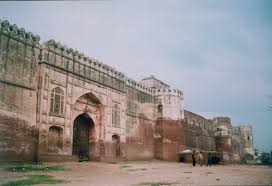
History Of Sheikhupura
|
|
|
The history of Sheikhupura goes back to 100 B.C. . .

|
|
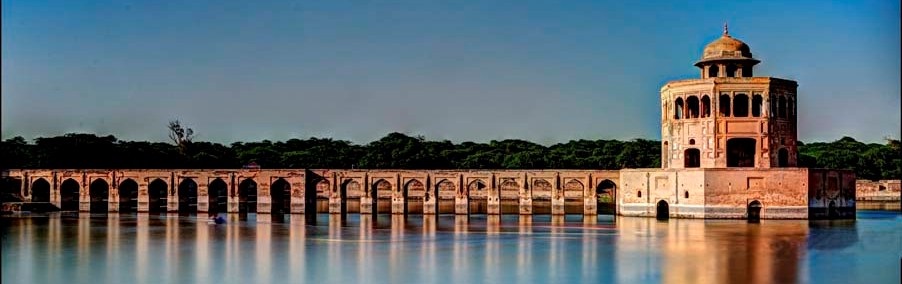
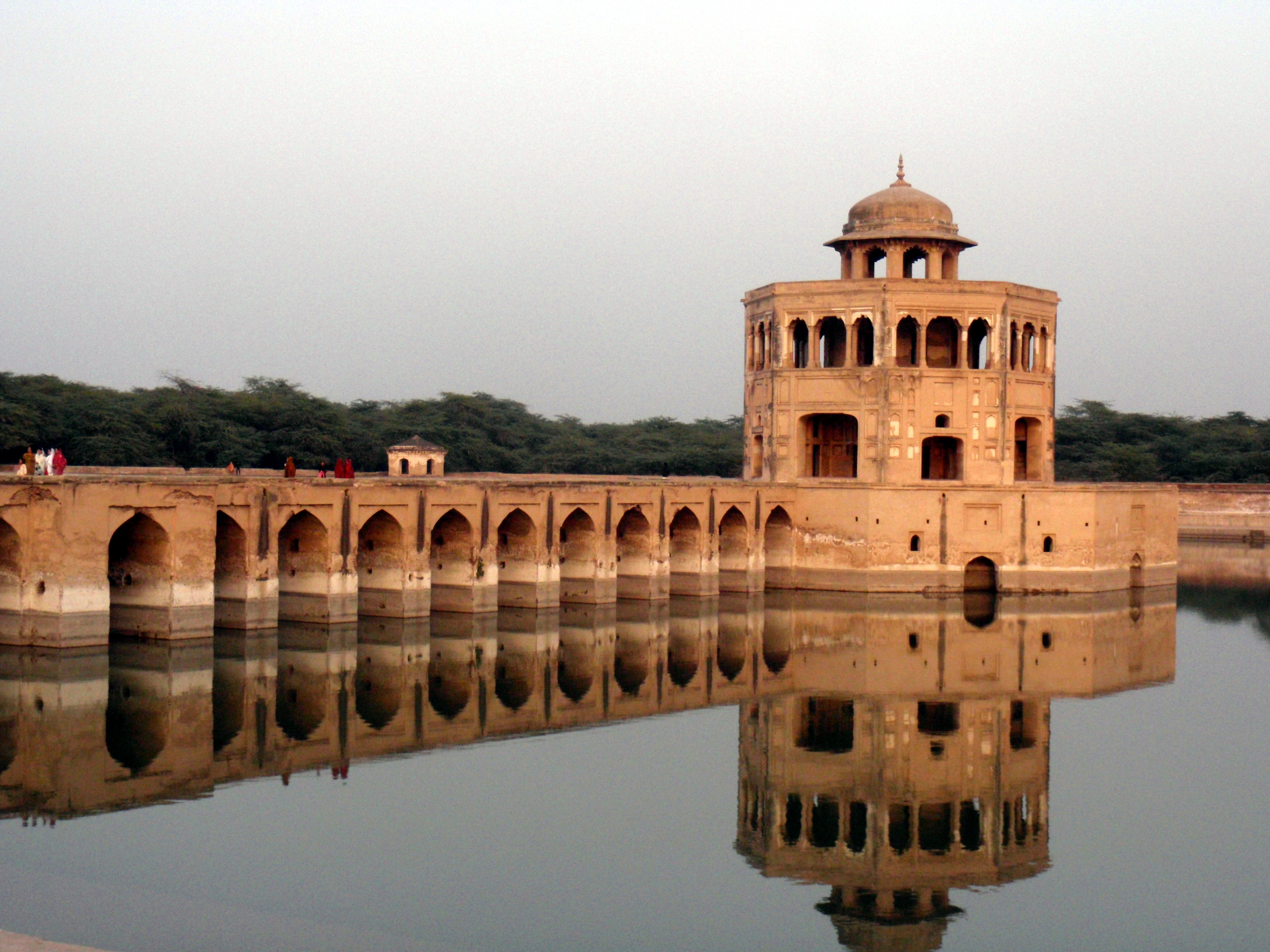
Hiran Minar
|
|
|
Hiran Minar (Minaret of Antelope) is peaceful environs near Lahore in Sheikhupura....
|
|
|
|
Qila Sheikhupura
|
|

|
Sheikhupura Fort/Qilla Sheikhupira is a fort near the city of Sheikhupura...
|
|
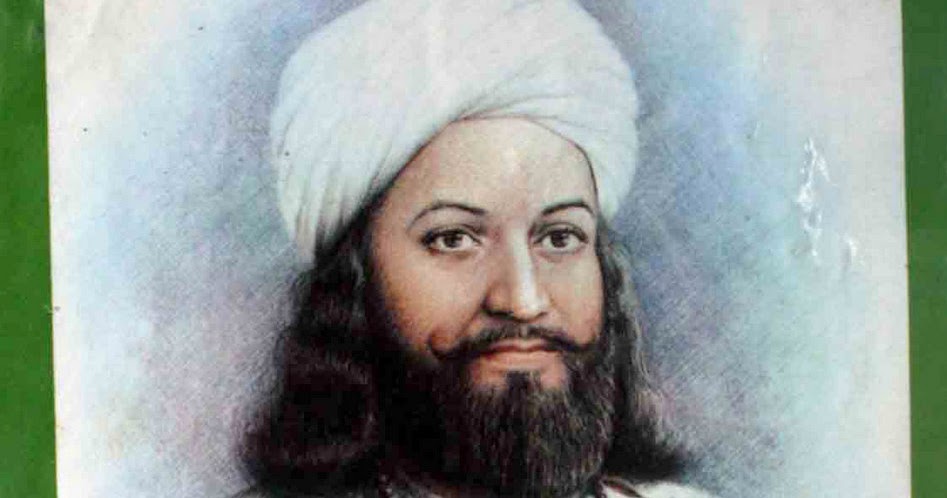
Waris Shah
|
|
|
Waris Shah was born in Jandiala Sher Khan, Punjab...
|
|
|
|
Famous Sheikhupurians
|
|

|
Famous Personalities born in Sheikhupura will be added here...
|
|
|
|

|
|
|
Home
| Sheikhupura
| Ferozewala
| Muridke
| Sharaqpur
| Safdarabad
| Forum
| Pakistan
| Contact Us
Sheikhupura.pk © 2006 All rights reserved.
|