|
|
|
Welcome To Sheikhupura - Today is
|

Pakistan(پاکِستان)- Sindh سِندھ (sɪnd; Sindhi: سنڌ ; Urdu: سِندھ)



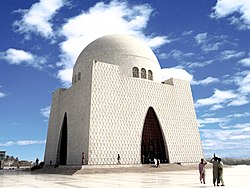
Sindh (sɪnd; Sindhi: سنڌ ; Urdu: سِندھ)
Sindh (sɪnd; Sindhi: سنڌ ; Urdu: سِندھ) is one of the four provinces of Pakistan, in the southeast of the country. Historically home to the Sindhi people, it is also
locally known as Mehran. Sindh is the third largest province of Pakistan by area, and second largest province by population after Punjab. Sindh is bordered
by Balochistan province to the west, and Punjab province to the north. Sindh also borders the Indian states of Gujarat and Rajasthan to the east, and Arabian Sea
to the south. Sindh's landscape consists mostly of alluvial plains flanking the Indus River, the Thar desert in the eastern portion of the province closest to
the border with India, and the Kirthar Mountains in the western part of Sindh.
Sindh has Pakistan's second largest economy, while its provincial capital Karachi is Pakistan's largest city and financial hub, and hosts the headquarters of
several multinational banks. Sindh is home to a large portion of Pakistan's industrial sector and contains two of Pakistan's commercial seaports, Port Bin Qasim
and the Karachi Port. The remainder of Sindh has an agriculture based economy, and produces fruit, food consumer items, and vegetables for the consumption other
parts of the country. Sindh is also the centre of Pakistan's pharmaceutical industry.
Sindh is known for its distinct culture which is strongly influenced by Sufism, an important marker of Sindhi identity for both Hindus (Sindh has Pakistan's highest
percentage of Hindu residents) and Muslims in the province. Several important Sufi shrines are located throughout the province which attract millions of
annual devotees.
Sindh's capital, Karachi, is Pakistan's most ethnically diverse city, with Muhajirs, or descendants of those who migrated to Pakistan from India after 1947 and
throughout the 1950s and 1960s, making up the majority of the population. Karachi and other urban centres of Sindh have seen ethnic tensions between the native
Sindhis and the Muhajirs boil over into violence on several occasions. Sindh is home to two UNESCO World Heritage Sites – the Historical Monuments at Makli,
and the Archaeological Ruins at Moenjodaro.
The word Sindh is derived from the Sanskrit term Sindhu (literally meaning "river"), which is a reference to Indus River. The official spelling "Sind" was
discontinued in 1988 by an amendment passed in Sindh Assembly.
The Greeks who conquered Sindh in 325 BC under the command of Alexander the Great rendered it as Indós, hence the modern Indus. The ancient Iranians referred to
everything east of the river Indus as hind. When the British came to India in the 17th century, they applied the Greek version of the name Sindh to all of South
Asia, calling it India. Pakistan's name is derived from an acronym, in which the letter 'S' stands for Sindh.
History :
Prehistoric period
Extent and major sites of the Indus Valley Civilization in pre-modern Pakistan and India 3000 BC
The Priest-King from Mohenjo-daro, more than 4000 years old, in the National Museum of Pakistan, Karachi
Excavated ruins of Mohenjo-daro, Sindh, Pakistan
Sindh's first known village settlements date as far back as 7000 BCE. Permanent settlements at Mehrgarh, currently in Balochistan, to the west expanded into Sindh.
This culture blossomed over several millennia and gave rise to the Indus Valley Civilization around 3000 BCE. The Indus Valley Civilization rivalled the contemporary
civilizations of Ancient Egypt and Mesopotamia in size and scope, numbering nearly half a million inhabitants at its height with well-planned grid cities and sewer
systems.
The primitive village communities in Balochistan were still struggling against a difficult highland environment, a highly cultured people were trying to assert
themselves at Kot Diji. This was one of the most developed urban civilizations of the ancient world. It flourished between the 25th century BCE and 1500 BCE in
the Indus valley sites of Mohenjo Daro and Harappa. The people had a high standard of art and craftsmanship and a well-developed system of quasi-pictographic
writing which remains un-deciphered. The remarkable ruins of the beautifully planned towns, the brick buildings of the common people, roads, public baths and the
covered drainage system suggest a highly organized community.
According to some accounts, there is no evidence of large palaces or burial grounds for the elite. The grand and presumably holy site might have been the great
bath, which is built upon an artificially created elevation. This indigenous civilization collapsed around 1700 BCE. The cause is hotly debated and may have
been a massive earthquake, which dried up the Ghaggar River. Skeletons discovered in the ruins of Moan Jo Daro ("mount of dead") were thought to indicate that the
city was suddenly attacked and the population was wiped out, but further examinations showed that the marks on the skeletons were due to erosion and not of
violence.
Part of a series on
Sindhis
Etymology History Language Culture Cuisine Diaspora Sindhology Tribes Media
Kingdoms
Indus Valley civilization Sindhu Rai Soomra Samma Kalhora Talpur
vte
Early history
The ancient city of Roruka, identified with modern Aror/Rohri, was capital of the Sauvira Kingdom, and finds mentioned early Buddhist literature as a major trading
center. Sindh finds mention in the Hindu epic Mahabharata as being part of Bharatvarsha. Sindh was conquered by the Persian Achaemenid Empire in the 6th century
BC. In the late 4th century BC, Sindh was conquered by a mixed army led by Macedonian Greeks under Alexander the Great. Alexander described his encounters with
these trans-Indus tribes of Sindh: "I am involved in the land of lions and brave people, where every foot of the ground is like a well of steel, confronting my
soldier. You have brought only one son into the world, but everyone in this land can be called an Alexander." The region remained under control of Greek satraps
for only a few decades. After Alexander's death, there was a brief period of Seleucid rule, before Sindh was traded to the Mauryan Empire led by Chandragupta in
305 BC. During the rule of the Mauryan Emperor Ashoka, the Buddhist religion spread to Sindh.
Mauryan rule ended in 185 BC with the overthrow of the last king by the Shunga Dynasty. In the disorder that followed, Greek rule returned when Demetrius I of
Bactria led a Greco-Bactrian invasion of India and annexed most of the northwestern lands, including Sindh. Demetrius was later defeated and killed by a usurper,
but his descendants continued to rule Sindh and other lands as the Indo-Greek Kingdom. Under the reign of Menander I, many Indo-Greeks followed his example and
converted to Buddhism.
In the late 2nd century BC, Scythian tribes shattered the Greco-Bactrian empire and invaded the Indo-Greek lands. Unable to take the Punjab region, they invaded
South Asia through Sindh, where they became known as Indo-Scythians (later Western Satraps). By the 1st century AD, the Kushan Empire annexed Sindh. Kushans under
Kanishka were great patrons of Buddhism and sponsored many building projects for local beliefs. Ahirs were also found in large numbers in Sindh. Abiria
country of Abhira tribe was in southern Sindh.
The Kushan Empire was defeated in the mid 3rd century AD by the Sassanid Empire of Persia, who installed vassals known as the Kushanshahs in these far eastern
territories. These rulers were defeated by the Kidarites in the late 4th century.
It then came under the Gupta Empire after dealing with the Kidarites. By the late 5th century, attacks by Hephthalite tribes known as the Indo-Hephthalites or
Hunas (Huns) broke through the Gupta Empire's northwestern borders and overran much of northwestern India. Concurrently, Ror dynasty ruled parts of the region
for several centuries.
Afterwards, Sindh came under the rule of Emperor Harshavardhan, then the Rai Dynasty around 478. The Rais were overthrown by Chachar of Alor around 632. The
Brahman dynasty ruled a vast territory that stretched from Multan in the north to the Rann of Kutch, Alor was their capital.
Arrival of Islam
In 712, Muhammad bin Qasim conquered the Sindh and Indus Valley, bringing South Asian societies into contact with Islam. Dahir was an unpopular Hindu king that
ruled over a Buddhist majority and that Chach of Alor and his kin were regarded as usurpers of the earlier Buddhist Rai Dynasty, a view questioned by
those who note the diffuse and blurred nature of Hindu and Buddhist practices in the region,[30] especially that of the royalty to be patrons of both and those
who believe that Chach may have been a Buddhist. The forces of Muhammad bin Qasim defeated Raja Dahir in alliance with the Hindu Jats and other regional
governors.
In 711 AD, Muhammad bin Qasim led an Umayyad force of 20,000 cavalry and 5 catapults. Muhammad bin Qasim defeated the Raja Dahir, and captured the cities of Alor,
Multan and Debal. Sindh became the easternmost State of the Umayyad Caliphate and was referred to as "Sind" on Arab maps, with lands further east known as "Hind".
Muhammad bin Qasim built the city of Mansura as his capital; the city then produced famous historical figures such as Abu Mashar Sindhi, Abu Ata al-Sindhi, Abu
Raja Sindhi and Sind ibn Ali. At the port city of Debal, most of the Bawarij embraced Islam and became known as Sindhi Sailors, who were renowned for their in
navigation, geography and languages. After Bin Qasim left, the Umayyads ruled Sindh through the Habbari dynasty.
By the year 750, Debal (modern Karachi) was second only to Basra; Sindhi sailors from the port city of Debal voyaged to Basra, Bushehr, Musqat, Aden, Kilwa,
Zanzibar, Sofala, Malabar, Sri Lanka and Java (where Sindhi merchants were known as the Santri). During the power struggle between the Umayyads and the Abbasids.
The Habbari Dynasty became semi independent and was eliminated and Mansura was invaded by Sultan Mahmud Ghaznavi. Sindh then became an easternmost State of the
Abbasid Caliphate ruled by the Soomro Dynasty until the Siege of Baghdad (1258). Mansura was the first capital of the Soomra Dynasty and the last of the Habbari
dynasty. Muslim geographers, historians and travelers such as al-Masudi, Ibn Hawqal, Istakhri, Ahmed ibn Sahl al-Balkhi, al-Tabari, Baladhuri, Nizami,[34] al-Biruni,
Saadi Shirazi, Ibn Battutah and Katip Çelebi[35] wrote about or visited the region, sometimes using the name "Sindh" for the entire area from the Arabian Sea to
the Hindu Kush.
Soomra dynasty period
When Sindh was under the Arab Umayyad Caliphate, the Arab Habbari dynasty was in control. The Umayyads appointed Aziz al Habbari as the governor of Sindh. Habbaris
ruled Sindh until Sultan Mahmud Ghaznavi defeated the Habbaris in 1024. Sultan Mahmud Ghaznavi viewed the Abbasid Caliphate to be the caliphs thus he removed the
remaining influence of the Umayyad Caliphate in the region and Sindh fell to Abbasid control following the defeat of the Habbaris. The Abbasid Caliphate then
appointed Al Khafif from Samarra; 'Soomro' means 'of Samarra' in Sindhi. The new governor of Sindh was to create a better, stronger and stable government. Once
he became the governor, he allotted several key positions to his family and friends; thus Al-Khafif or Sardar Khafif Soomro formed the Rajput Soomro Dynasty in
Sindh; and became its first ruler. Until the Siege of Baghdad (1258) the Soomro dynasty was the Abbasid Caliphate's functionary in Sindh, but after that it
became independent.
When the Soomro dynasty lost ties with the Abbasid Caliphate after the Siege of Baghdad (1258,) the Soomra ruler Dodo-I established their rule from the shores
of the Arabian Sea to the Punjab in the north and in the east to Rajasthan and in the west to Pakistani Balochistan. The Soomros were one of the first indigenous
Muslim dynasties in Sindh of Parmar Rajput origin. They were the first Muslims to translate the Quran into the Sindhi language. The Sammas created a chivalrous
culture in Sindh, which eventually facilitated their rule centred at Mansura. It was later abandoned due to changes in the course of the Puran River; they ruled
for the next 95 years until 1351. During this period, Kutch was ruled by the Samma Dynasty, who enjoyed good relations with the Soomras in Sindh. Since the Soomro
Dynasty lost its support from the Abbasid Caliphate, the Sultans of Delhi wanted a piece of Sindh. The Soomros successfully defended their kingdom for about 36
years, but their dynasties soon fell to the might of the Sultanate of Delhi's massive armies such as the Tughluks and the Khaljis.
Makli Hill is one of the largest necropolises in the world.
In 1339 Jam Unar founded a Sindhi Muslim Rajput Samma Dynasty and challenged the Sultans of Delhi. He used the title of the Sultan of Sindh. The Samma tribe reached
its peak during the reign of Jam Nizamuddin II (also known by the nickname Jám Nindó). During his reign from 1461 to 1509, Nindó greatly expanded the new capital
of Thatta and its Makli hills, which replaced Debal. He patronized Sindhi art, architecture and culture. The Samma had left behind a popular legacy especially in
architecture, music and art. Important court figures included the famous poet Kazi Kadal, Sardar Darya Khan, Moltus Khan, Makhdoom Bilawal and the theologian Kazi
Kaadan. However, Thatta was a port city; unlike garrison towns, it could not mobilize large armies against the Arghun and Tarkhan Mongol invaders, who killed many
regional Sindhi Mirs and Amirs loyal to the Samma. Some parts of Sindh still remained under the Sultans of Delhi and the ruthless Arghuns and the Tarkhans sacked
Thatta during the rule of Jam Ferozudin.
Migration of Baloch
According to Dr. Akhtar Baloch, Professor at University of Karachi, the Balochi migrated from Balochistan during the Little Ice Age and settled in Sindh and Punjab.
The Little Ice Age is conventionally defined as a period extending from the sixteenth to the nineteenth centuries, or alternatively, from about
1300 to about 1850. According to Professor Baloch, the climate of Balochistan was very cold during this epoch and the region was uninhabitable
during the winters so the Baloch people emigrated in waves to Sindh and Punjab.
Mughal era
In the year 1524, the few remaining Sindhi Amirs welcomed the Mughal Empire and Babur dispatched his forces to rally the Arghuns and the Tarkhans, branches of a
Turkic dynasty. In the coming centuries, Sindh became a region loyal to the Mughals, a network of forts manned by cavalry and musketeers further extended Mughal
power in Sindh. In 1540 a mutiny by Sher Shah Suri forced the Mughal Emperor Humayun to withdraw to Sindh, where he joined the Sindhi Emir Hussein Umrani.
In 1541 Humayun married Hamida Banu Begum, who gave birth to the infant Akbar at Umarkot in the year 1542.
During the reign of Akbar the Great, Sindh produced scholars and others such as Mir Ahmed Nasrallah Thattvi, Tahir Muhammad Thattvi and Mir Ali Sir Thattvi and the
Mughal chronicler Abu'l-Fazl ibn Mubarak and his brother the poet Faizi was a descendant of a Sindhi Shaikh family from Rel, Siwistan in Sindh. Abu'l-Fazl ibn
Mubarak was the author of Akbarnama (an official biographical account of Akbar) and the Ain-i-Akbari (a detailed document recording the administration of the Mughal
Empire).
Shah Jahan carved a subah (imperial province), covering Sindh, called Thatta after its capital, out of Multan, further bordering on the Ajmer and Gujarat subahs
as well as the rival Persian Safavid empire.
During the Mughal period, Sindhi literature began to flourish and historical figures such as Shah Abdul Latif Bhittai, Sulatn-al-Aoliya Muhammad Zaman and Sachal
Sarmast became prominent throughout the land. In 1603 Shah Jahan visited the State of Sindh; at Thatta he was generously welcomed by the locals after the death
of his father Jahangir. Shah Jahan ordered the construction of the Shahjahan Mosque, which was completed during the early years of his rule under the supervision
of Mirza Ghazi Beg. During his reign, in 1659 in the Mughal Empire, Muhammad Salih Tahtawi of Thatta created a seamless celestial globe with Arabic and Persian
inscriptions using a wax casting method.
Sindh was home to very famous wealthy merchant-rulers such as Mir Bejar of Sindh, whose great wealth had attracted the close ties with the Sultan bin Ahmad of
Oman.
In the year 1701, the Kalhora Nawabs were authorized in a firman by the Mughal Emperor Aurangzeb to administer subah Sindh.
From 1752 to 1762, Marathas collected Chauth or tributes from Sindh. Maratha power was decimated in the entire region after the Third Battle of Panipat in
1761. In 1762, Mian Ghulam Shah Kalhoro brought stability in Sindh, he reorganized and independently defeated the Marathas and their prominent vassal the Rao of
Kuch in the Thar Desert and returned victoriously.
After the Sikhs annexed Multan, the Kalhora Dynasty supported counterattacks against the Sikhs and defined their borders.
In 1783 a firman which designated Mir Fateh Ali Khan Talpur as the new Nawab of Sindh, and mediated peace particularly after the Battle of Halani and the defeat
of the ruling Kalhora by the Talpur Baloch tribes.
Talpurs
The Talpur tribe migrated from Dera Ghazi Khan in Punjab to Sindh on the invitation of Kalhora to help them organize unruly Baloch tribes living in Sindh. Talpurs,
who learned the Sindhi language, settled in northern Sindh. Very soon they united all the Baloch tribes of Sindh and formed a confederacy against the Kalhora
Dynasty. The Talpur Baloch soon gained power, overthrowing the Kalhora after the Battle of Halani to conquer and rule Sindh and other parts of present-day Pakistan,
from 1783 to 1843. British East India Company forces led by General Charles James Napier overthrew the Talpur Baloch in 1843.
British Raj
Sindh became part of the Bombay Presidency in 1909.
In 1802, when Mir Ghulam Ali Khan Talpur Baloch succeeded as the Talpur Nawab, internal tensions broke out in the state. As a result, the following year the Maratha
Empire declared war on Sindh and Berar Subah, during which Arthur Wellesley took a leading role causing much early suspicion between the Emirs of Sindh and the
British Empire. The British East India Company made its first contacts in the Sindhi port city of Thatta, which according to a report was:
"a city as large as London containing 50,000 houses which were made of stone and mortar with large verandahs some three or four stories high ... the city has
3,000 looms ... the textiles of Sindh were the flower of the whole produce of the East, the international commerce of Sindh gave it a place among that of Nations,
Thatta has 400 schools and 4,000 Dhows at its docks, the city is guarded by well armed Sepoys".
British and Bengal Presidency forces under General Charles James Napier arrived in Sindh in the mid-19th century and conquered Sindh in February 1843. The
Baloch coalition led by Talpur Balochs under Mir Nasir Khan Talpur Baloch was defeated at the Battle of Miani during which 5,000 Talpur Baloch were killed. Shortly
afterwards, Hoshu Sheedi commanded another army at the Battle of Dubbo, where 5,000 Baloch were killed. The first Agha Khan helped the British in their conquest
of Sindh. As result, he was granted a lifetime pension. A British journal by Thomas Postans mentions the captive Sindhi Amirs: "The Amirs as being the prisoners
of 'Her Majesty'... they are maintained in strict seclusion; they are described as Broken-Hearted and Miserable men, maintaining much of the dignity of fallen
greatness, and without any querulous or angry complaining at this unlivable source of sorrow, refusing to be comforted". Within weeks, Charles Napier and his
forces occupied Sindh. After 1853 the British divided Sindh into districts and later made it part of British India's Bombay Presidency. Sibghatullah Shah Rashidi
pioneered the Sindhi Muslim Hur Movement against the British Raj. He was hanged on 20 March 1943 in Hyderabad, Sindh. His burial place is not known. During the
British period, railways, printing presses and bridges were introduced in the province. Writers like Mirza Kalich Beg compiled and traced the literary history of
Sindh.
Muhammad Ali Jinnah, who spoke three languages: Gujarati, Kutchi, and English
Although Sindh had a culture of religious syncretism, communal harmony and tolerance due to Sindh's strong Sufi culture in which both Sindhi Muslims and Sindhi
Hindus partook, the mostly Muslim peasantry was oppressed by the Hindu moneylending class and also by the landed Muslim elite. Sindhi Muslims eventually
demanded the separation of Sindh from the Bombay Presidency, a move opposed by Sindhi Hindus. Another campaign in the early 20th century which attracted
Sindhi Muslims was the Khilafat Movement, for which support had been generated by the Sufi pirs of Sindh. In that time period Sindh emerged at the forefront
of the Khilafat cause.
By 1936 Sindh was separated from the Bombay Presidency. Elections in 1937 resulted in local Sindhi Muslim parties winning the bulk of seats. By the mid-1940s
the Muslim League gained a foothold in the province and after winning over the support of local Sufi pirs, came to have the support of the overwhelming
majority of Sindhi Muslims for its campaign to create Pakistan.
Independence of Pakistan
At the time of Partition, there were 1,400,000 Hindu Sindhis, dominating the province's upper middle class. There was very little communal violence in Sindh,
in comparison to Punjab. Communal violence in Ajmer, India, in December 1947 led to Muslim refugees crossing over the Thar Desert to Sindh in Pakistan.
This sparked riots in Hyderabad and later in Karachi, although less than 500 Hindu were killed in Sindh between 1947-48 as Sindhi Muslims largely resisted
calls to turn against their Hindu neighbours. Hundreds of thousands of Sindhi Hindus fled to India. The arrival of Sindhi Hindu refugees in the Indian
town of Godhra sparked the March 1948 anti-Muslim riots there which led to an emigration of Ghanchi Muslims from Godhra to Pakistan. Indian Muslims from
the United Provinces, Central Provinces and Bombay continued migrating to and settling in Sindh's urban centers throughout the 1950s and 1960s.
Population :
Sindh has the 2nd highest Human Development Index out of all of Pakistan's provinces at 0.628. The 2017 Census of Pakistan indicated a population
of 47.9 million. The population of Sindh increased 2.41% annually since the census of 1998. Sindh was the least gainer of population among provinces during this
period. More than half of the population are urban dwellers, mainly found in Karachi, Hyderabad, Sukkur, Mirpurkhas, Nawabshah District and Larkana. Sindhi is the
sole official language of Sindh since the 19th century.
The Sindhis as a whole are composed of original descendants of an ancient population known as Sammaat, sub-groups related to the Baloch origin are found in
interior Sindh and to a lesser extent Sindhis of Pashtun origins. Sindhis of Balochi origins make up about 30% of the total Sindhi population (although they
speak Sindhi Saraiki as their native tongue), while Urdu-speaking Muhajirs makeup over 19% of the total population of the province while Punjabi are 10% and
Pashtuns represent 7%. In August 1947, before the partition of India, the total population of Sindh was 38,87,070 out of which 28,32,000 were Muslims and
10,15,000 were Hindus
According to Dr. Akhtar Baloch, Professor at University of Karachi, the Baloch migrated from Balochistan during the Little Ice Age. This is conventionally
defined as a period extending from the sixteenth to the nineteenth centuries, or alternatively, from about 1300. to about 1850,
although climatologists and historians working with local records no longer expect to agree on either the start or end dates of this period, which varied
according to local conditions. Professor Baloch said the climate of Balochistan was very cold and the region was inhabitable during the winter so the Baloch
people in waves migrated and settled in Sindh and Punjab.
Religions :
Islam in Sindh has a strong Sufi ethos with numerous Muslim saints and mystics, such as the Sufi poet Shah Abdul Latif Bhittai, having lived in Sindh
historically. One popular legend which highlights the strong Sufi presence in Sindh is that 125,000 Sufi saints and mystics are buried on Makli Hill near
Thatta. The development of Sufism in Sindh was similar to the development of Sufism in other parts of the Muslim world. In the 16th century two Sufi tareeqat
(orders) - Qadria and Naqshbandia - were introduced in Sindh. Sufism continues to play an important role in the daily lives of Sindhis.
Sindh also has Pakistan's highest percentage of Hindu residents, with 7.5% of Sindh's population overall, and 11.56% of Sindh's rural population, classifying
itself as Hindu, and over 40% of residents in Tharparkar District identifying themselves as Hindu. The communal harmony between Sindhi Muslims and
Hindus is an example of Sindh's pluralistic and tolerant Sufi culture.
Climate :
Sindh lies in a tropical to subtropical region; it is hot in the summer and mild to warm in winter. Temperatures frequently rise above 46 °C (115 °F)
between May and August, and the minimum average temperature of 2 °C (36 °F) occurs during December and January in the northern and higher elevated regions.
The annual rainfall averages about seven inches, falling mainly during July and August. The southwest monsoon wind begins in mid-February and continues until
the end of September, whereas the cool northerly wind blows during the winter months from October to January.
Sindh lies between the two monsoons—the southwest monsoon from the Indian Ocean and the northeast or retreating monsoon, deflected towards it by the Himalayan
mountains—and escapes the influence of both. The region's scarcity of rainfall is compensated by the inundation of the Indus twice a year, caused by the spring
and summer melting of Himalayan snow and by rainfall in the monsoon season.
Sindh is divided into three climatic regions: Siro (the upper region, centred on Jacobabad), Wicholo (the middle region, centred on Hyderabad), and Lar
(the lower region, centred on Karachi). The thermal equator passes through upper Sindh, where the air is generally very dry. Central Sindh's temperatures are
generally lower than those of upper Sindh but higher than those of lower Sindh. Dry hot days and cool nights are typical during the summer. Central Sindh's
maximum temperature typically reaches 43–44 °C (109–111 °F). Lower Sindh has a damper and humid maritime climate affected by the southwestern winds in summer
and northeastern winds in winter, with lower rainfall than Central Sindh. Lower Sindh's maximum temperature reaches about 35–38 °C (95–100 °F). In the Kirthar
range at 1,800 m (5,900 ft) and higher at Gorakh Hill and other peaks in Dadu District, temperatures near freezing have been recorded and brief snowfall is
received in the winters.
Sindh in Pictures(Sindh Gallery)


|
|
|
|
|
|
History Of Sheikhupura
|
|
|
The history of Sheikhupura goes back to 100 B.C. . .

|
|
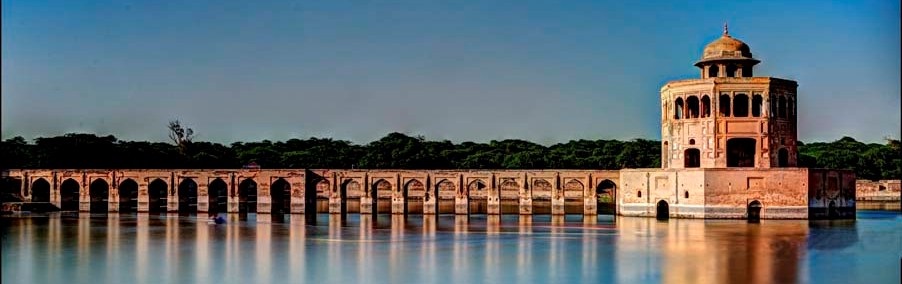
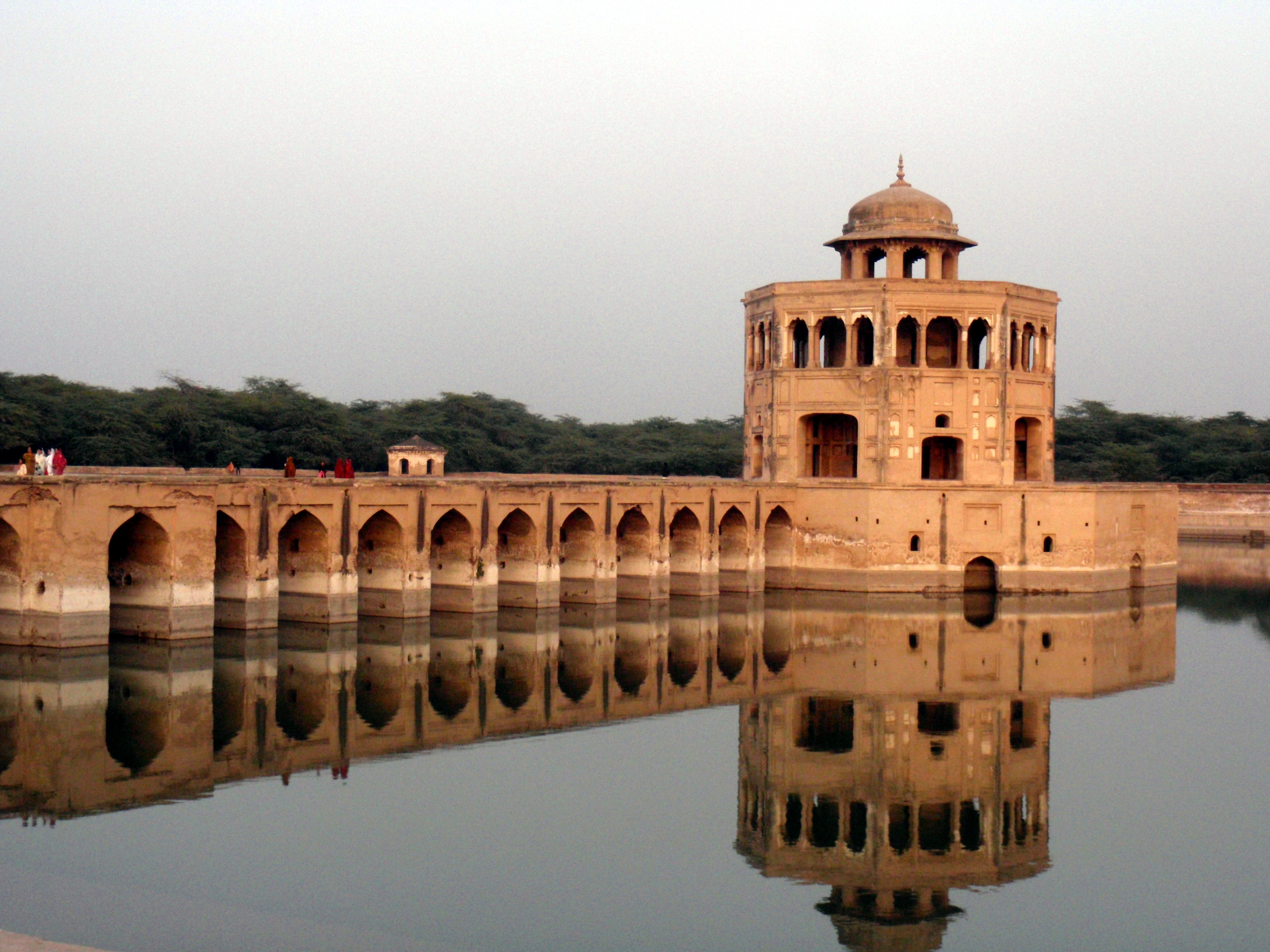
Hiran Minar
|
|
|
Hiran Minar (Minaret of Antelope) is peaceful environs near Lahore in Sheikhupura....
|
|
|
|
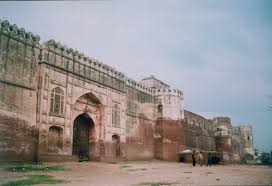
Qila Sheikhupura
|
|

|
Sheikhupura Fort/Qilla Sheikhupira is a fort near the city of Sheikhupura...
|
|
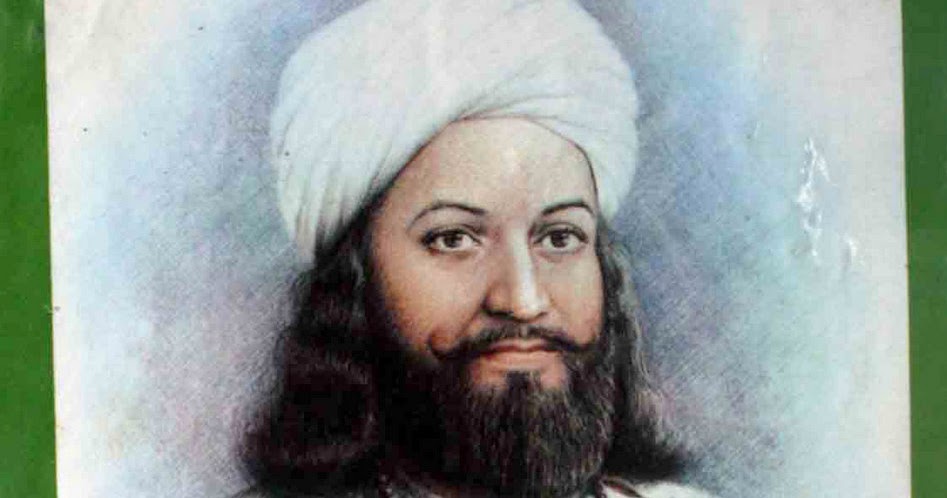
Waris Shah
|
|
|
Waris Shah was born in Jandiala Sher Khan, Punjab...
|
|
|
|
Famous Sheikhupurians
|
|

|
Famous Personalities born in Sheikhupura will be added here...
|
|
|
|

|
|
|
Home
| Sheikhupura
| Ferozewala
| Muridke
| Sharaqpur
| Safdarabad
| Forum
| Pakistan
| Contact Us
Sheikhupura.pk © 2006 All rights reserved.
|