|
|
|
Welcome To Sheikhupura - Today is
|

Pakistan(پاکِستان), (officially The Islamic Republic of Pakistan اِسلامی جمہوریہ پاکِستان)
History
Standing Buddha from Gandhara, Greco-Buddhist art, 1st-2nd century AD.
The Vedic period (1500–500 BCE) was characterised by an Indo-Aryan culture; during this period the Vedas, the oldest scriptures associated with Hinduism, were
composed, and this culture later became well established in the region. Multan was an important Hindu pilgrimage centre.] The Vedic civilisation flourished
in the ancient Gandhāran city of Takṣaśilā, now Taxila in the Punjab, which was founded around 1000 BCE.] Successive ancient empires and kingdoms ruled the
region: the Persian Achaemenid Empire (around 519 BCE), Alexander the Great's empire in 326 BCE] and the Maurya Empire, founded by Chandragupta Maurya and
extended by Ashoka the Great, until 185 BCE. The Indo-Greek Kingdom founded by Demetrius of Bactria (180–165 BCE) included Gandhara and Punjab and reached its
greatest extent under Menander (165–150 BCE), prospering the Greco-Buddhist culture in the region. Taxila had one of the earliest universities and centres
of higher education in the world, which was established during the late Vedic period in 6th century BCE. The school consisted of several monasteries without
large dormitories or lecture halls where the religious instruction was provided on an individualistic basis. The ancient university was documented by the invading
forces of Alexander the Great, "the like of which had not been seen in Greece," and was also recorded by Chinese pilgrims in the 4th or 5th century CE.
At its zenith, the Rai Dynasty (489–632 CE) of Sindh ruled this region and the surrounding territories. The Pala Dynasty was the last Buddhist empire, which,
under Dharmapala and Devapala, stretched across South Asia from what is now Bangladesh through Northern India to Pakistan.
The Arab conqueror Muhammad bin Qasim conquered Sindh in 711 CE. The Pakistan government's official chronology claims this as the time when the
foundation of Pakistan was laid but the concept of Pakistan came in 19th century.The Early Medieval period (642–1219 CE) witnessed the spread of Islam in
the region. During this period, Sufi missionaries played a pivotal role in converting a majority of the regional Buddhist and Hindu population to Islam.
These developments set the stage for the rule of several successive Muslim empires in the region, including the Ghaznavid Empire (975–1187 CE), the Ghorid Kingdom,
and the Delhi Sultanate (1206–1526 CE). The Lodi dynasty, the last of the Delhi Sultanate, was replaced by the Mughal Empire (1526–1857 CE).
Badshahi Mosque, Lahore -
The Mughals introduced Persian literature and high culture, establishing the roots of Indo-Persian culture in the region. From the region of modern-day Pakistan,
key cities during the Mughal rule were Lahore and Thatta, both of which were chosen as the site of impressive Mughal buildings. In the early 16th century,
the region remained under the Mughal Empire ruled by Muslim emperors. By the early 18th century, increasing European influence contributed to the slow
disintegration of the Mughal Empire as the lines between commercial and political dominance became increasingly blurred.
During this time, the English East India Company had established coastal outposts. Control over the seas, greater resources, technology, and British military
protection led the Company to increasingly flex its military muscle, allowing the Company to gain control over the subcontinent by 1765 and sideline European
competitors. Expanding access beyond Bengal and the subsequent increased strength and size of its army enabled it to annex or subdue most of region by the 1820s.
Many historians see this as the start of the region's colonial period. By this time, with its economic power severely curtailed by the British parliament and
itself effectively made an arm of British administration, the Company began more deliberately to enter non-economic arenas such as education, social reform, and
culture. Such reforms included the enforcement of the English Education Act in 1835 and the introduction of the Indian Civil Service (ICS). Traditional
madrasahs—primary institutions of higher learning for Muslims in the subcontinent—were no longer supported by the English Crown, and nearly all of the madrasahs
lost their financial endowment.
The gradual decline of the Mughal Empire in the early 18th century enabled the Sikh Empire to control larger areas until the British East India Company gained
ascendancy over South Asia. A rebellion in 1857 called the Sepoy mutiny of Bengal was the region's major armed struggle against the British Empire and Queen
Victoria. Divergence in the relationship between Hinduism and Islam created a major rift in British India that led to motivated religious violence in British
India. The language controversy further escalated the tensions between Hindus and Muslims. The Hindu renaissance witnessed an awakening of intellectualism
in traditional Hinduism and saw the emergence of more assertive influence in the social and political spheres in British India. An intellectual movement
to counter the Hindu renaissance was led by Sir Syed Ahmad Khan, who helped found the All-India Muslim League in 1901 and envisioned, as well as advocated for,
the two-nation theory. In contrast to the Indian National Congress's anti-British efforts, the Muslim League was a pro-British movement whose political program
inherited the British values that would shape Pakistan's future civil society. In events during World War I, British Intelligence foiled an anti-English
conspiracy involving the nexus of Congress and the German Empire. The largely non-violent independence struggle led by the Indian Congress
engaged millions of protesters in mass campaigns of civil disobedience in the 1920s and 1930s against the British Empire.
The Muslim League slowly rose to mass popularity in the 1930s amid fears of under-representation and neglect of British Muslims in politics. In his presidential
address of 29 December 1930, Allama Iqbal called for "the amalgamation of North-West Muslim-majority Indian states" consisting of Punjab, North-West Frontier
Province, Sind, and Baluchistan. The perceived neglect of Muslim interests by Congress led British provincial governments during the period of 1937–39
convinced Muhammad Ali Jinnah, the founder of Pakistan to espouse the two-nation theory and led the Muslim League to adopt the Lahore Resolution of 1940 presented
by Sher-e-Bangla A.K. Fazlul Haque, popularly known as the Pakistan Resolution. In World War II, Jinnah and British-educated founding fathers in the Muslim
League supported the United Kingdom's war efforts, countering opposition against it whilst working towards Sir Syed's vision.
Pakistan in Pictures :


Provinces Of Pakistan


|
|
|
|
|
|
History Of Sheikhupura
|
|
|
The history of Sheikhupura goes back to 100 B.C. . .

|
|
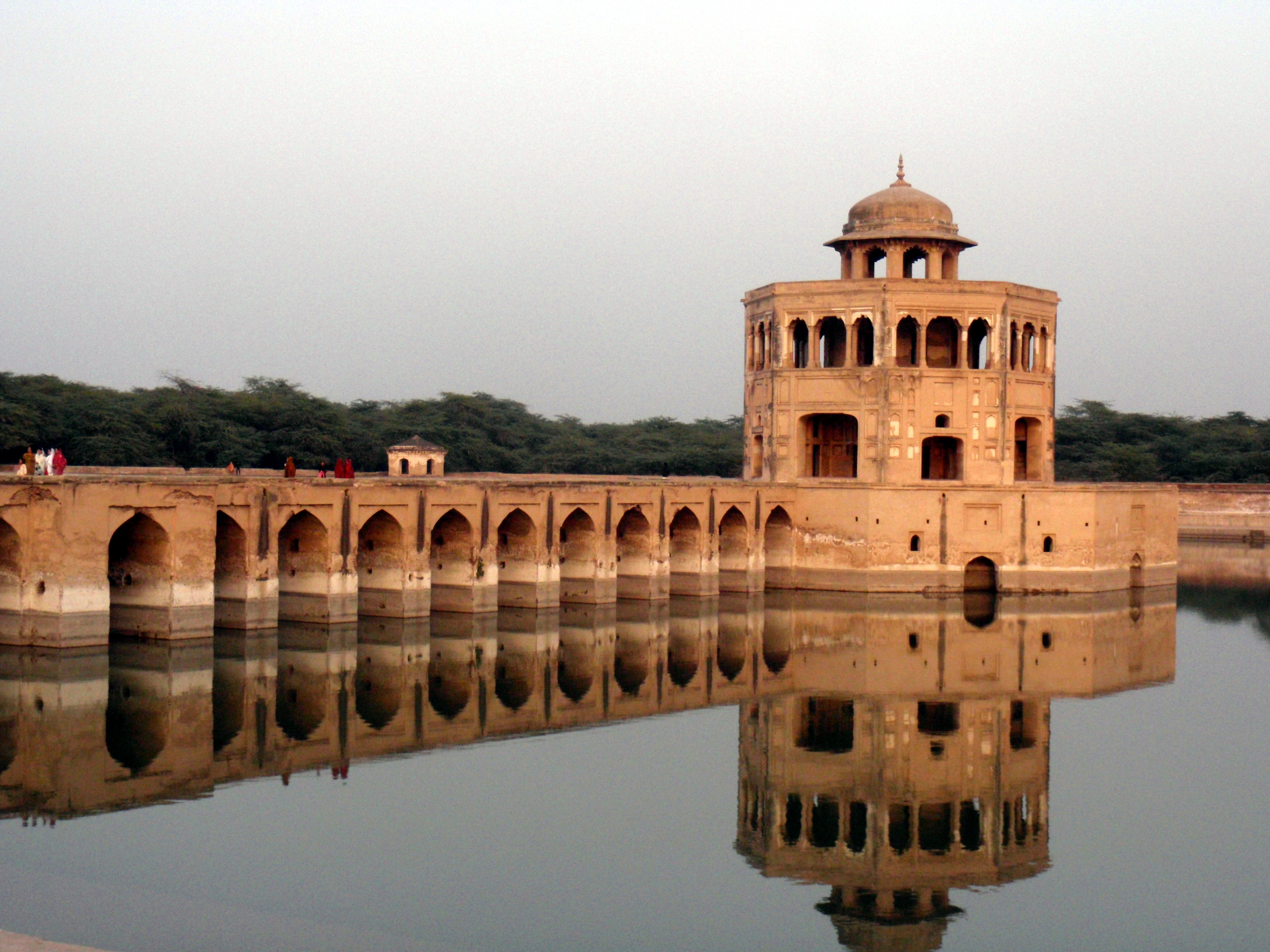
Hiran Minar
|
|
|
Hiran Minar (Minaret of Antelope) is peaceful environs near Lahore in Sheikhupura....
|
|
|
|
Qila Sheikhupura
|
|

|
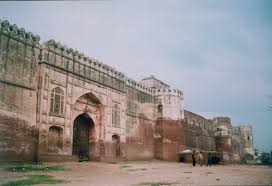
Sheikhupura Fort/Qilla Sheikhupira is a fort near the city of Sheikhupura...
|
|
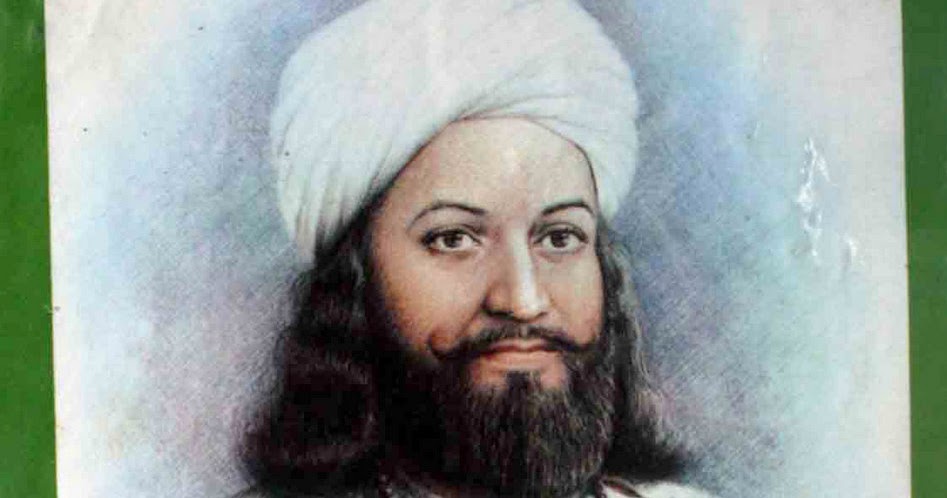
Waris Shah
|
|
|
Waris Shah was born in Jandiala Sher Khan, Punjab...
|
|
|
|
Famous Sheikhupurians
|
|

|
Famous Personalities born in Sheikhupura will be added here...
|
|
|
|

|
|
|
Home
| Sheikhupura
| Ferozewala
| Muridke
| Sharaqpur
| Safdarabad
| Forum
| Pakistan
| Contact Us
Sheikhupura.pk © 2006 All rights reserved.
|