|
|
|
Welcome To Sheikhupura - Today is
|

Pakistan(پاکِستان), (officially The Islamic Republic of Pakistan اِسلامی جمہوریہ پاکِستان)
Pakistan Movement :
The 1946 elections resulted in the Muslim League winning 90 percent of the seats reserved for Muslims. Thus, the 1946 election was effectively a plebiscite in which
the Indian Muslims were to vote on the creation of Pakistan, a plebiscite won by the Muslim League. This victory was assisted by the support given to the Muslim
League by the support of the landowners of Sindh and Punjab. The Congress, which initially denied the Muslim League's claim of being the sole representative of Indian
Muslims, was now forced to recognise the fact. The British had no alternative except to take Jinnah's views into account as he had emerged as the sole
spokesperson of the Entire British India's Muslims. However, the British did not want British India to be partitioned, and in one last effort to prevent it they
devised the Cabinet Mission plan.
As the cabinet mission failed, the British government announced its intention to end the British Rule in 1946–47. Nationalists in British India—including
Jawaharlal Nehru and Abul Kalam Azad of Congress, Jinnah of the All-India Muslim League, and Master Tara Singh representing the Sikhs—agreed to the proposed terms of
transfer of power and independence in June 1947 with the Viceroy of India, Lord Mountbatten of Burma. As the United Kingdom agreed to the partitioning of India
in 1947, the modern state of Pakistan was established on 14 August 1947 (27th of Ramadan in 1366 of the Islamic Calendar), amalgamating the Muslim-majority eastern
and northwestern regions of British India. It comprised the provinces of Balochistan, East Bengal, the North-West Frontier Province, West Punjab, and Sindh.
In the riots that accompanied the partition in Punjab Province, it is believed that between 200,000 and 2,000,000 people were killed
in what some have described as a retributive genocide between the religions while 50,000 Muslim women were abducted and raped by Hindu and Sikh men and
33,000 Hindu and Sikh women also experienced the same fate at the hands of Muslims. Around 6.5 million Muslims moved from India to West Pakistan
and 4.7 million Hindus and Sikhs moved from West Pakistan to India.[120] It was the largest mass migration in human history. Dispute over Jammu and
Kashmir led to the First Kashmir War in 1948.
Independence and modern Pakistan :
After independence in 1947, Jinnah, the President of the Muslim League, became the nation's first Governor-General as well as the first President-Speaker of the
Parliament, but he died of tuberculosis on 11 September 1948. Meanwhile, Pakistan's founding fathers agreed to appoint Liaquat Ali Khan, the
secretary-general of the party, the nation's first Prime Minister. With dominion status in the Commonwealth of Nations, independent Pakistan had two British
monarchs before it became a republic.
The creation of Pakistan was never fully accepted by many British leaders, among them Lord Mountbatten. Mountbatten clearly expressed his lack of support and
faith in the Muslim League's idea of Pakistan. Jinnah refused Mountbatten's offer to serve as Governor-General of Pakistan. When Mountbatten was asked by
Collins and Lapierre if he would have sabotaged Pakistan had he known that Jinnah was dying of tuberculosis, he replied 'most probably'.
Maulana Shabbir Ahmad Usmani, a respected Deobandi alim (scholar) who occupied the position of Shaykh al-Islam in Pakistan in 1949, and Maulana Mawdudi of
Jamaat-i-Islami played a pivotal role in the demand for an Islamic constitution. Mawdudi demanded that the Constituent Assembly make an explicit declaration
affirming the "supreme sovereignty of God" and the supremacy of the shariah in Pakistan.
A significant result of the efforts of the Jamaat-i-Islami and the ulama was the passage of the Objectives Resolution in March 1949. The Objectives Resolution,
which Liaquat Ali Khan called the second most important step in Pakistan's history, declared that "sovereignty over the entire universe belongs to God Almighty
alone and the authority which He has delegated to the State of Pakistan through its people for being exercised within the limits prescribed by Him is a sacred
trust". The Objectives Resolution has been incorporated as a preamble to the constitutions of 1956, 1962, and 1973.
Democracy was stalled by the martial law that had been enforced by President Iskander Mirza, who was replaced by army chief, General Ayub Khan. After adopting a
presidential system in 1962, the country experienced exceptional growth until a second war with India in 1965 that led to an economic downturn and wide-scale public
disapproval in 1967. Consolidating control from Ayub Khan in 1969, President Yahya Khan had to deal with a devastating cyclone that caused 500,000 deaths
in East Pakistan.
Signing of the Tashkent Declaration to end hostilities with India in 1965 in Tashkent, USSR, by President Ayub alongside Bhutto (centre) and Aziz Ahmed (left)
In 1970 Pakistan held its first democratic elections since independence, meant to mark a transition from military rule to democracy, but after the East Pakistani
Awami League won against the Pakistan Peoples Party (PPP), Yahya Khan and the military establishment refused to hand over power. Operation Searchlight,
a military crackdown on the Bengali nationalist movement, led to a declaration of independence and the waging of a war of liberation by the Bengali Mukti Bahini
forces in East Pakistan. However, in West Pakistan the conflict was described as a civil war as opposed to a war of liberation.
Independent researchers estimate that between 300,000 and 500,000 civilians died during this period while the Bangladesh government puts the number of dead at
three million, a figure that is now nearly universally regarded as excessively inflated. Some academics such as Rudolph Rummel and Rounaq Jahan say both
sides committed genocide; others such as Richard Sisson and Leo E. Rose believe there was no genocide. I
With Pakistan surrendering in the war, Yahya Khan was replaced by Zulfikar Ali Bhutto as president; the country worked towards promulgating its constitution and
putting the country on the road to democracy. Democratic rule resumed from 1972 to 1977—an era of self-consciousness, intellectual leftism, nationalism, and
nationwide reconstruction. In 1972 Pakistan embarked on an ambitious plan to develop its nuclear deterrence capability with the goal of preventing any
foreign invasion; the country's first nuclear power plant was inaugurated in that same year. Accelerated in response to India's first nuclear test in 1974,
this crash program was completed in 1979.
Democracy ended with a military coup in 1977 against the leftist PPP, which saw General Zia-ul-Haq become the president in 1978. From 1977 to 1988, President Zia's
corporatisation and economic Islamisation initiatives led to Pakistan becoming one of the fastest-growing economies in South Asia. While building up the
country's nuclear program, increasing Islamisation, and the rise of a homegrown conservative philosophy, Pakistan helped subsidise and distribute US resources
to factions of the mujahideen against the USSR's intervention in communist Afghanistan. Pakistan's North-West Frontier Province became a base for the
anti-Soviet Afghan fighters, with the province's influential Deobandi ulama playing a significant role in encouraging and organising the 'jihad'.
President Zia died in a plane crash in 1988, and Benazir Bhutto, daughter of Zulfikar Ali Bhutto, was elected as the country's first female Prime Minister.
The PPP was followed by conservative Pakistan Muslim League (N), and over the next decade the leaders of the two parties fought for power, alternating in office
while the country's situation worsened; economic indicators fell sharply, in contrast to the 1980s. This period is marked by prolonged stagflation, instability,
corruption, nationalism, geopolitical rivalry with India, and the clash of left wing-right wing ideologies. As PML(N) secured a supermajority in elections
in 1997, Sharif authorised nuclear testings (See:Chagai-I and Chagai-II), as a retaliation to the second nuclear tests ordered by India, led by Prime Minister Atal
Bihari Vajpayee in May 1998.
President George W. Bush meets with President Musharraf in Islamabad during his 2006 visit to Pakistan.
Military tension between the two countries in the Kargil district led to the Kargil War of 1999, and turmoil in civic-military relations allowed General Pervez
Musharraf to take over through a bloodless coup d'état. Musharraf governed Pakistan as chief executive from 1999 to 2001 and as President from 2001 to
2008—a period of enlightenment, social liberalism, extensive economic reforms, and direct involvement in the US-led war on terrorism. When the National
Assembly historically completed its first full five-year term on 15 November 2007, the new elections were called by the Election Commission.
After the assassination of Benazir Bhutto in 2007, the PPP secured the most votes in the elections of 2008, appointing party member Yousaf Raza Gillani as Prime
Minister. Threatened with impeachment, President Musharraf resigned on 18 August 2008, and was succeeded by Asif Ali Zardari. Clashes with the
judicature prompted Gillani's disqualification from the Parliament and as the Prime Minister in June 2012. By its own financial calculations, Pakistan's
involvement in the war on terrorism has cost up to ~$118 billion, sixty thousand casualties and more than 1.8 million displaced civilians. The general
election held in 2013 saw the PML(N) almost achieve a supermajority, following which Nawaz Sharif was elected as the Prime Minister, returning to the post for the
third time in fourteen years, in a democratic transition. In 2018, Imran Khan (the chairman of PTI) won the Pakistan general election, 2018 with 116 general
seats and became the 22nd Prime Minister of Pakistan in election of National Assembly of Pakistan for Prime Minister by getting 176 votes against Shehbaz Sharif
(the chairman of PMLN) who got 96 votes.
Role of Islam in Pakistan :
The idea of Pakistan, which had received overwhelming popular support among Indian Muslims, especially those in the provinces of British India where Muslims were in
a minority such as the United Provinces., was articulated in terms of an Islamic state by the Muslim League leadership, the ulama (Islamic clergy) and Jinnah.
Jinnah had developed a close association with the ulama and upon his death was described by one such alim, Maulana Shabbir Ahmad Usmani, as the greatest Muslim
after Aurangzeb and as someone who desired to unite the Muslims of the world under the banner of Islam.
The Objectives Resolution in March 1949, which declared God as the sole sovereign over the entire universe, represented the first formal step to transform Pakistan
into an Islamic state. Muslim League leader Chaudhry Khaliquzzaman asserted that Pakistan could only truly become an Islamic state after bringing all
believers of Islam into a single political unit. Keith Callard, one of the earliest scholars on Pakistani politics, observed that Pakistanis believed in the
essential unity of purpose and outlook in the Muslim world and assumed that Muslim from other countries would share their views on the relationship between religion
and nationality.
The Friday Prayers at the Badshahi Mosque in Lahore
However, Pakistan's pan-Islamist sentiments for a united Islamic bloc called Islamistan were not shared by other Muslim governments, although Islamists such as
the Grand Mufti of Palestine, Al-Haj Amin al-Husseini, and leaders of the Muslim Brotherhood, became drawn to the country. Pakistan's desire for an international
organization of Muslim countries was fulfilled in the 1970s when the Organization of Islamic Conference (OIC) was formed.
The strongest opposition to the Islamist ideological paradigm being imposed on the state came from the Bengali Muslims of East Pakistan whose educated class,
according to a survey by social scientist Nasim Ahmad Jawed, preferred secularism and focused on ethnic identity unlike educated West Pakistanis who tended to
prefer an Islamic identity. The Islamist party Jamaat-e-Islami considered Pakistan to be an Islamic state and believed Bengali nationalism to be unacceptable.
In the 1971 conflict over East Pakistan the Jamaat-e-Islami fought the Bengali nationalists on the Pakistan Army's side.
After Pakistan's first ever general elections the 1973 Constitution was created by an elected Parliament. The Constitution declared Pakistan an Islamic Republic
and Islam as the state religion. It also stated that all laws would have to be brought into accordance with the injunctions of Islam as laid down in the Quran and
Sunnah and that no law repugnant to such injunctions could be enacted. The 1973 Constitution also created certain institutions such as the Shariat Court and the
Council of Islamic Ideology to channel the interpretation and application of Islam.
Pakistan's leftist Prime Minister Zulfikar Ali Bhutto faced vigorous opposition which coalesced into a movement united under the revivalist banner of Nizam-e-Mustafa
("Rule of the prophet") which aimed to establish an Islamic state based on Sharia laws. Bhutto agreed to some Islamist demands before being overthrown in a coup.
In 1977 after taking power from Bhutto in a coup de'tat, General Zia-ul-Haq, who came from a religious background, committed himself to establishing an Islamic
state and enforcing sharia law. Zia established separate Shariat judicial courts and court benches to judge legal cases using Islamic doctrine.
Zia bolstered the influence of the ulama (Islamic clergy) and the Islamic parties. Zia-ul-Haq forged a strong alliance between the military and Deobandi
institutions and even though most Barelvi ulama and only a few Deobandi scholars had supported Pakistan's creation, Islamic state politics came to be mostly
in favour of Deobandi (and later Ahl-e-Hadith/Salafi) institutions instead of Barelvi. Sectarian tensions increased with Zia's anti-Shia policies.
According to a PEW opinion poll a majority of Pakistanis support making Sharia the official law of the land. In a survey of several Muslim countries, the PEW
Research Centre also found that Pakistanis tend to identify with their religion more than their nationality in contrast to Muslims in other nations such as Egypt,
Indonesia and Jordan.
Pakistan in Pictures :


Provinces Of Pakistan


|
|
|
|
|
|
History Of Sheikhupura
|
|
|
The history of Sheikhupura goes back to 100 B.C. . .

|
|
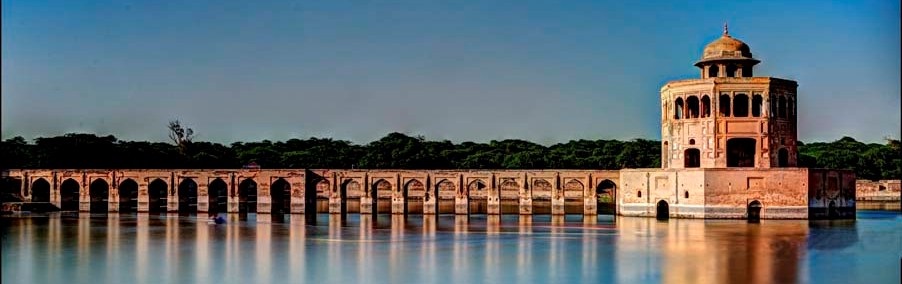
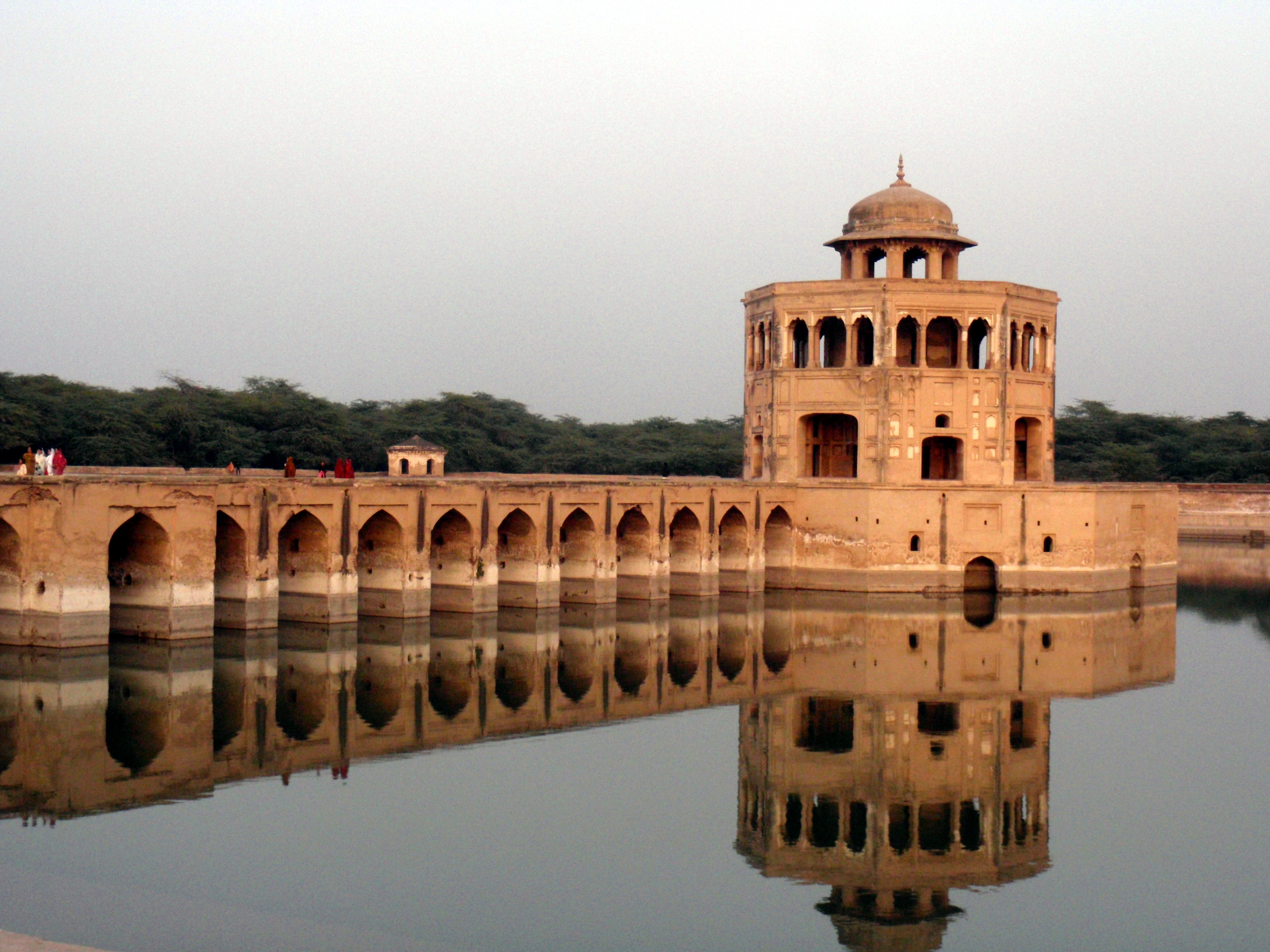
Hiran Minar
|
|
|
Hiran Minar (Minaret of Antelope) is peaceful environs near Lahore in Sheikhupura....
|
|
|
|
Qila Sheikhupura
|
|

|
Sheikhupura Fort/Qilla Sheikhupira is a fort near the city of Sheikhupura...
|
|
Waris Shah
|
|
|
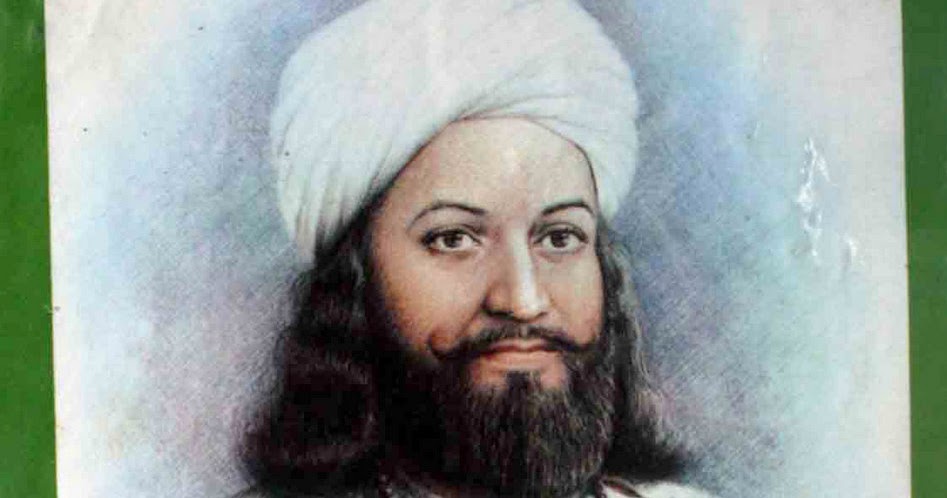
Waris Shah was born in Jandiala Sher Khan, Punjab...
|
|
|
|
Famous Sheikhupurians
|
|

|
Famous Personalities born in Sheikhupura will be added here...
|
|
|
|

|
|
|
Home
| Sheikhupura
| Ferozewala
| Muridke
| Sharaqpur
| Safdarabad
| Forum
| Pakistan
| Contact Us
Sheikhupura.pk © 2006 All rights reserved.
|